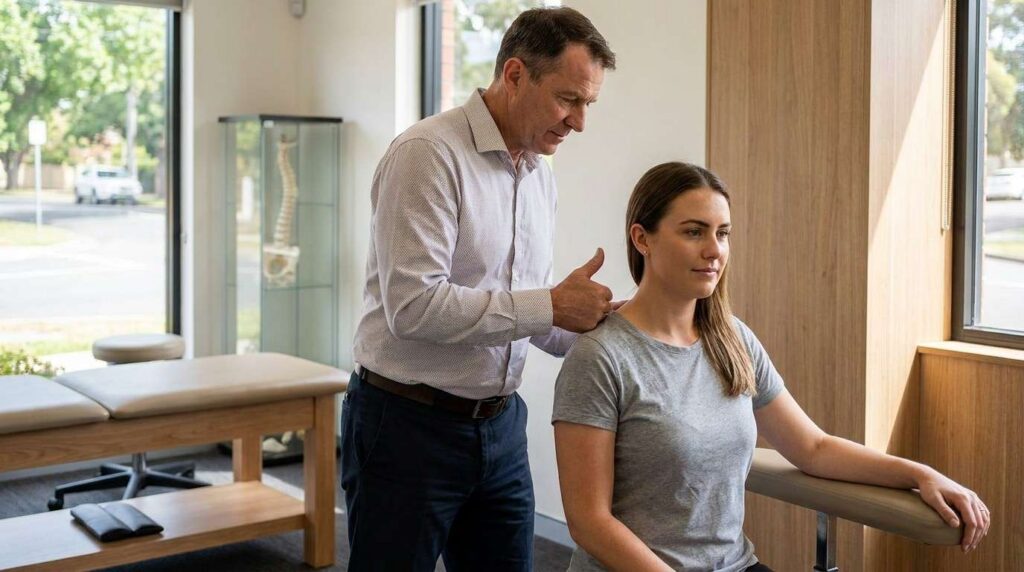
Yes, chiropractors are trained to identify, release, and treat muscle knots as part of broader musculoskeletal care. Using a blend of soft tissue techniques, trigger point therapy, and spinal adjustments, they target the tight bands of muscle fibres causing pain, stiffness, and restricted movement. For Sydney patients dealing with desk-bound tension, sports strain, or chronic postural stress, chiropractic care offers a structured, evidence-based pathway to lasting relief rather than temporary comfort.
Yes, Chiropractors Treat Muscle Knots Effectively
Chiropractors regularly treat muscle knots, also called myofascial trigger points, by combining manual soft tissue release with spinal adjustments that address the underlying biomechanical cause. This dual approach relaxes the contracted muscle fibres, restores blood flow, and corrects the joint dysfunction that often keeps the knot active in the first place.
What a Muscle Knot Actually Is
A muscle knot is a small, hyper-irritable area within a tight band of muscle fibres that fails to relax after contraction. It feels firm, tender, and can refer pain to other regions, including the head, shoulders, or lower back. Common causes include sustained poor posture, repetitive movement, dehydration, stress, and underlying spinal joint dysfunction that overloads specific muscle groups.
Techniques Chiropractors Use to Release Knots
Chiropractors apply several proven methods to release muscle knots, including ischemic compression, myofascial release, instrument-assisted soft tissue mobilisation (IASTM), dry needling where qualified, and gentle stretching protocols. These are typically paired with spinal adjustments to correct the joint restriction feeding into the muscle. Patients often feel immediate softening of the tissue, improved range of motion, and reduced referred pain within the first few sessions.Understanding the release is only part of the picture. The longer-term outcome depends on targeted muscle therapy techniques being matched to the specific cause behind each knot.Why Muscle Knots Keep Coming BackMuscle knots return when the underlying driver remains unaddressed. Releasing the knot without correcting why it formed creates a short-lived result. Sydney office workers, students, and athletes often experience the same knot returning to the same spot within days because the postural load, spinal alignment, or movement pattern causing it has not changed.
Posture, Stress, and Spinal Alignment
Forward head posture, rounded shoulders, and prolonged sitting place sustained load on the upper traps, levator scapulae, and rhomboids, creating recurring trigger points. Spinal joint restrictions amplify this by forcing surrounding muscles into protective tension. Addressing posture-driven muscle tension through structured correction work, ergonomic adjustments, and targeted strengthening is what shifts the pattern from recurring flare-ups to lasting relief.
What to Expect From a Chiropractic Session
A first session begins with a detailed history and physical assessment, including posture analysis, range of motion testing, and palpation to locate active trigger points. Treatment typically combines soft tissue release with spinal adjustments tailored to the findings. Most patients feel noticeably looser after the first visit, with deeper changes occurring across a structured care plan. Sessions usually run between 20 and 40 minutes, and your chiropractor will guide you through stretches, hydration, and movement habits that support recovery between visits.
Conclusion
Chiropractors do get muscle knots out, combining soft tissue techniques with spinal adjustments to release tension at its source rather than masking the symptom.For Sydney patients dealing with recurring knots, the path forward is identifying the postural, spinal, or lifestyle driver and addressing it through consistent, evidence-based care that supports long-term mobility.At Spine and Posture Care Chiropractor Sydney, we build personalised plans that target the root cause. Book your assessment today and move freely again.
Frequently Asked Questions
How many chiropractic sessions does it take to remove a muscle knot?
Most patients notice relief within 2–4 sessions, though chronic or posture-related knots may require a longer structured plan to prevent recurrence and address the underlying cause.
Is releasing a muscle knot painful?
Treatment can feel tender during compression or release, similar to a deep massage. Discomfort is brief, and most patients describe immediate relief and looser movement afterwards.
Can muscle knots cause headaches or nerve pain?
Yes. Trigger points in the neck, shoulders, and upper back commonly refer pain into the head, jaw, and arms, mimicking tension headaches or nerve-related symptoms.
Should I see a chiropractor or a massage therapist for muscle knots?
Chiropractors address both the muscle knot and the spinal joint dysfunction driving it, offering longer-term resolution. Massage therapy alone often provides shorter-lived relief.
Can I prevent muscle knots from returning?
Yes. Improving posture, taking movement breaks, staying hydrated, strengthening weak muscle groups, and addressing spinal alignment significantly reduce how often knots return.