
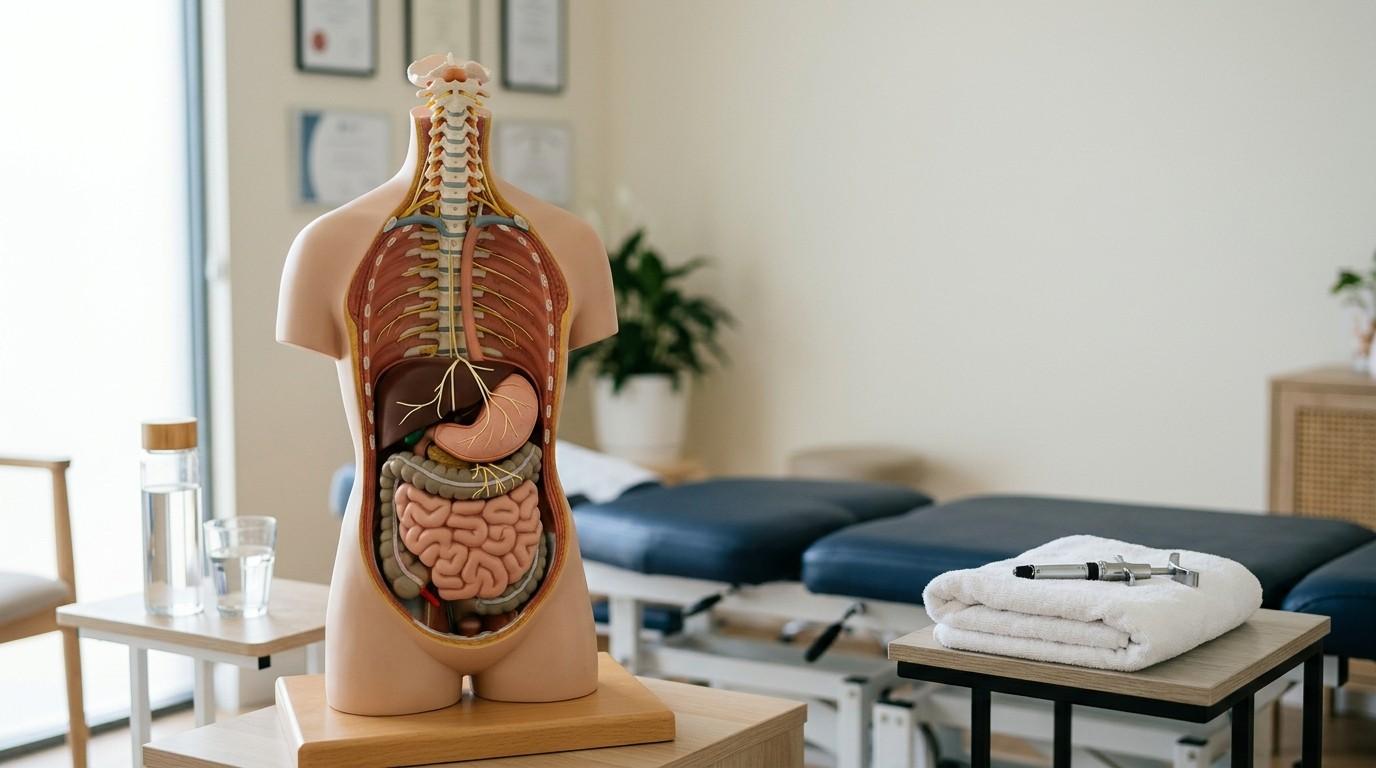
 Yes, increased bowel activity after a chiropractic adjustment is a recognised and generally harmless response. It happens because spinal manipulation directly influences the autonomic nervous system, which governs digestive function. Most people notice it within a few hours of their session and it resolves on its own within 24 to 72 hours.
This matters because your spine and your gut are more connected than most people realise. Understanding that connection helps you know what to expect and when to stop worrying.
I’ll walk you through exactly why this happens, what a normal response looks like, and what your body needs from you after an adjustment.
A chiropractic adjustment is a targeted, controlled force applied to specific spinal joints. The goal is to restore normal movement, reduce nerve interference, and bring the spine back into better alignment. But the effects don’t stay local to the joint being treated.
Your spine is the central highway for your nervous system. When a chiropractor adjusts a vertebral segment, the mechanical input travels through the spinal cord and branches out to the organs, muscles, and systems those nerves supply.
Your autonomic nervous system has two branches sympathetic and parasympathetic and they work in opposition. The sympathetic branch drives your fight-or-flight response. The parasympathetic branch drives your rest-and-digest response.
Spinal manipulation has a measurable effect on autonomic tone. Research published in the Journal of Manipulative and Physiological Therapeutics has documented changes in heart rate variability and autonomic output following cervical and lumbar adjustments, which reflects a genuine shift in how the nervous system is operating after treatment.
When that shift tips toward parasympathetic dominance, your digestive system wakes up.
The gut-brain axis is a two-way communication network linking your central nervous system to your enteric nervous system the network of neurons embedded in your gastrointestinal tract. Spinal nerves, particularly those emerging from the thoracic and lumbar regions, feed directly into the organs of digestion.
Subluxations areas of restricted or misaligned spinal movement can create low-level interference along these nerve pathways. When an adjustment clears that interference, the signal flow to the gut normalises. For some people, that normalisation shows up as a sudden increase in bowel activity.
The short answer is that your nervous system just got a reset, and your digestive system is responding to it. There are three specific mechanisms worth understanding.
The parasympathetic nervous system is responsible for peristalsis the rhythmic muscular contractions that move food and waste through your intestines. When parasympathetic tone increases after an adjustment, peristalsis speeds up.
This is sometimes called the rest-and-digest response, and it is the same mechanism that explains why people feel calm, sleepy, or deeply relaxed after a session. Your body has shifted out of a stress state, and the gut is one of the first systems to respond.
The lumbar spine and sacrum have a direct anatomical relationship with the pelvic floor and the lower bowel. Chronic tension in the muscles and connective tissue surrounding the lumbar vertebrae can create a kind of mechanical compression on the structures nearby including the sigmoid colon and rectum.
When that tension releases during an adjustment, the physical pressure on those structures eases. For some patients, particularly those with long-standing lower back tightness, this is enough to trigger an immediate urge to use the bathroom.
Spinal adjustments improve local circulation by reducing joint restriction and muscle guarding. Better blood flow to the mesenteric vessels the network of arteries supplying the intestines supports more efficient digestive motility.
This is a subtler mechanism than the nervous system effects, but it contributes to the overall picture. A gut that is better perfused is a gut that moves more efficiently.
This is the question most people are actually asking. And the honest answer is that in the vast majority of cases, increased bowel activity after an adjustment is completely normal.
A normal post-adjustment digestive response looks like this: one or two extra bowel movements in the 24 to 48 hours following your session, possibly with looser consistency than usual, and no accompanying pain, blood, fever, or significant cramping.
The Chiropractic & Manual Therapies journal has documented a range of post-adjustment reactions including fatigue, temporary soreness, and changes in bowel or bladder function as part of the recognised healing response to spinal manipulation. These are not side effects in the harmful sense. They are signs that your body is adapting.
There are situations where digestive changes after an adjustment deserve more attention. If you experience severe abdominal pain, blood in your stool, symptoms that persist beyond 72 hours, or a pattern that worsens with each session, those are signals worth discussing with both your chiropractor and your GP.
It is also worth noting that if you have a pre-existing gastrointestinal condition such as irritable bowel syndrome, Crohn’s disease, or diverticulitis your gut may be more reactive to any change in nervous system tone. That does not mean chiropractic care is off-limits. It means your care plan needs to account for it.
Increased bowel activity is one of several responses people notice after their first few adjustments. Knowing the full picture helps you interpret what your body is doing.
Expected responses include mild soreness at the adjustment site (similar to post-exercise muscle ache), temporary fatigue, a brief headache, heightened emotional sensitivity, and changes in sleep quality usually for the better. These typically resolve within 24 to 48 hours.
Unexpected responses those that warrant a call to your chiropractor include sharp or radiating pain that is new or significantly worse than before, numbness or tingling that develops after the session, or any neurological symptom that was not present prior to treatment.
The distinction matters. Most post-adjustment reactions are part of the healing response after spinal manipulation, not evidence that something went wrong.
For most people, the digestive changes settle within 24 to 72 hours. The first session tends to produce the strongest response because the nervous system is experiencing the most significant shift from its baseline.
As you continue with a course of care and your spine adapts to better alignment, the intensity of these reactions typically decreases. By the third or fourth session, most patients report that the post-adjustment response feels milder and shorter in duration.
If the digestive response is still pronounced after several sessions, that is worth raising with your chiropractor. It may indicate that a particular spinal level needs a modified approach, or that something else is contributing to the gut reactivity.
Your body does its best recovery work when you give it the right conditions. A few straightforward steps make a real difference.
Drink more water than usual in the 24 hours after your session. Hydration supports both the musculoskeletal recovery process and healthy bowel function. Aim for at least two litres, more if you are physically active.
Avoid heavy, processed, or inflammatory foods on the day of your adjustment. Your digestive system is already in a heightened state of activity a clean, light diet reduces the load on it and lets the nervous system recalibration do its work without interference.
Rest where you can. The parasympathetic activation that drives the digestive response is also the state your body needs for tissue repair and nervous system integration. Pushing through a high-intensity workout or a stressful afternoon immediately after an adjustment works against that process.
And if you feel the urge to use the bathroom go. Holding it back when your body is actively trying to clear the bowel is counterproductive.
Pooping more after a chiropractic adjustment is a normal, well-documented response to spinal manipulation and its effects on the autonomic nervous system. It reflects genuine physiological change not a problem.
Understanding the gut-spine connection helps you approach your care with realistic expectations and confidence in what your body is doing. Most responses resolve quickly and become less pronounced as your spine adapts.
At Spine and Posture Care Chiropractor Sydney, we take the time to explain exactly what to expect from your treatment before, during, and after each session. Book a consultation with our team and get personalised, evidence-based care that addresses the root cause of your symptoms.
Yes, it is. Chiropractic adjustments influence the autonomic nervous system, which directly regulates digestive function. Increased bowel activity in the 24 to 48 hours following a session is a recognised and generally harmless response.
Most people find the digestive response settles within 24 to 72 hours. The first few sessions tend to produce the strongest reaction, and the response typically becomes milder as your body adapts to regular care.
There is evidence that spinal manipulation particularly in the lumbar and sacral regions can support improved bowel motility by reducing nerve interference and activating the parasympathetic nervous system. Some patients report meaningful improvement in constipation with consistent chiropractic care.
The adjustment activates your parasympathetic nervous system, which triggers peristalsis the muscular contractions that move waste through your intestines. Combined with the release of tension in the lower spine and pelvis, this creates a strong and sometimes urgent sensation to use the bathroom.
In most cases, no. Increased frequency without pain, blood, or fever is a normal post-adjustment response. If symptoms persist beyond 72 hours, worsen with each session, or include any concerning features, speak with your chiropractor and your GP.
For some patients particularly those with chronic lower back dysfunction or nerve interference affecting the gut regular chiropractic care contributes to improved digestive regularity over time. The effect is indirect, working through the nervous system rather than the gut directly, but it is a genuine and documented benefit for a subset of patients.