
Living in Bronte offers an active coastal lifestyle, yet back pain and neck stiffness can still limit daily movement. Many people search for a trusted chiropractor near Bronte, Sydney when discomfort begins affecting work, sleep, or exercise. Understanding how professional chiropractic care works can help you make informed decisions about your spinal health.
Spine and Posture Care provides evidence-based chiropractic care focused on safe assessment, clear diagnosis, and structured rehabilitation. Our experienced chiropractor works with patients experiencing back pain, neck pain, posture concerns, and nerve-related symptoms. The goal is always to improve function, restore mobility, and reduce the likelihood of recurring pain.
Understanding the Spine and Nervous System
The spine protects the spinal cord and supports the entire musculoskeletal system. It includes the cervical vertebrae, thoracic vertebrae, lumbar vertebrae, and the sacrum. Between each vertebra sits an intervertebral disc, which absorbs load and allows movement.
When joint mobility becomes restricted or muscles tighten, irritation can affect the central nervous system and peripheral nervous system. This may contribute to local pain or radiating symptoms. Professional chiropractic assessment looks at joint function, muscle balance, posture, and neurological signs to determine what is contributing to discomfort.
Common Conditions Treated Near Bronte

Many patients present with mechanical spinal pain. Lower back pain relief often involves addressing lumbar vertebrae stiffness, facet joint irritation, or sacroiliac joint dysfunction. Muscle strain and ligament sprain can also play a role.
Disc conditions such as herniated disc or bulging disc may irritate nearby nerves. In some cases, degenerative disc disease or spinal stenosis contributes to persistent discomfort. Care is planned carefully and based on clinical findings rather than assumptions.
Neck pain frequently involves the cervical vertebrae and surrounding muscles, including the trapezius muscle. Poor posture can stress the erector spinae muscles and contribute to tension patterns. These imbalances can also trigger tension headaches or migraine symptoms.
Conditions such as sciatica, scoliosis, kyphosis, and lordosis may also be assessed. Sciatica develops when the sciatic nerve becomes irritated. Proper evaluation ensures that nerve-related pain is managed safely and appropriately.
How Professional Chiropractic Assessment Works
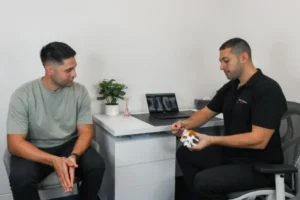
A consultation begins with detailed history taking. Your clinician asks about symptom patterns, work posture, activity levels, and previous injuries. Examination includes joint mobility testing, muscle assessment, and neurological screening.
Orthopedic and neurology testing help identify irritation within the nervous system. When clinically indicated, imaging such as X-ray, magnetic resonance imaging, or computed tomography may be reviewed. In complex nerve cases, referral for electromyography or nerve conduction study may be considered.
This structured process ensures ethical, patient-centred care grounded in evidence and clinical reasoning.
Treatment Methods Used in Modern Chiropractic Care
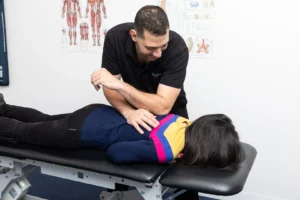
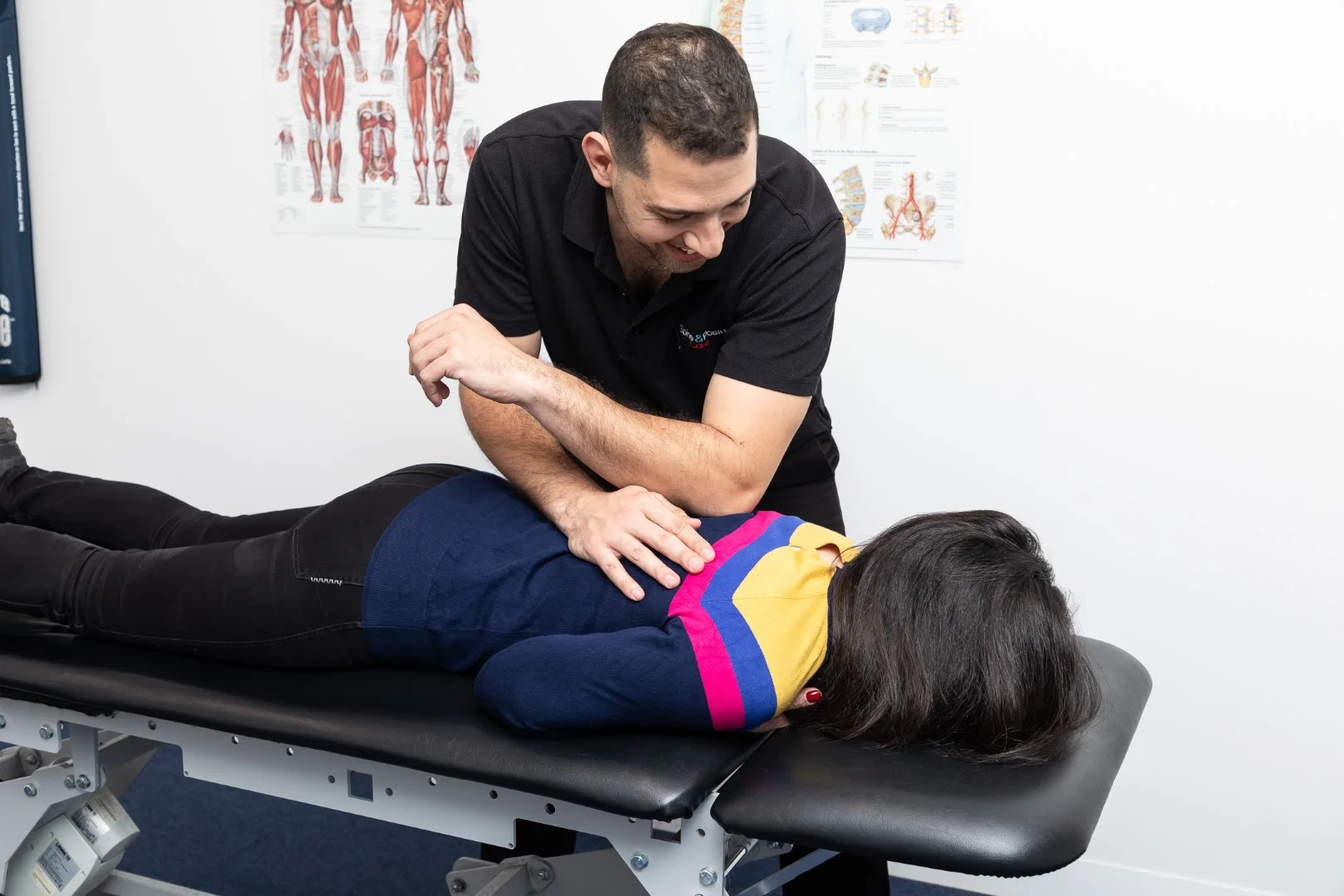
Treatment may include spinal adjustment and spinal manipulation therapy to improve joint mobility. Manual therapy techniques reduce muscular tension and support recovery.
For disc-related concerns, spinal decompression may reduce pressure on affected structures. Trigger point therapy and massage therapy can ease myofascial pain syndrome and muscle tightness.
Rehabilitation is equally important. Therapeutic exercise, postural retraining, and mobility restoration therapy help strengthen weak areas and improve long-term stability. Kinesiology taping may provide temporary support during recovery.
Posture Correction for Long-Term Results
Posture correction is more than standing upright. It addresses how the ribcage, pelvis, and spine align during daily activity. Long hours at a desk or repetitive training can gradually change spinal loading patterns.
A chiropractor for posture correction focuses on restoring spinal alignment and strengthening supporting muscles. This may reduce chronic pain management needs and improve comfort during work and leisure.
Supporting the Bronte Community
Residents around Bronte Baths, Bronte House, The Bronte Cutting, Waverley Cemetery, and Bronte Gully & Waterfall often lead active lifestyles. Coastal walks and beach activities are beneficial but can also strain the spine if underlying mobility is limited.
Our chiropractor services remain easily accessible via Bronte, Sydney Road, Macpherson Street, Hewlett Street, St Thomas Street, and Albion Street. Convenient access encourages consistent follow-up care, which supports lasting improvement.
Choosing an Ethical and Experienced Chiropractor
A licensed chiropractor should provide transparent explanations and avoid exaggerated claims. Ethical care means monitoring progress, adjusting treatment plans when needed, and referring to other healthcare providers when appropriate.
At Spine and Posture Care, structured assessment and clinical documentation guide every step. Our experienced chiropractor prioritises safety, professionalism, and clear communication.
What to Expect During Your Visit
During your first visit, expect thorough assessment and discussion. Treatment is only recommended when appropriate. Each spinal adjustment is applied carefully, with attention to comfort and safety.
Progress is reviewed regularly. Rehabilitation exercises are adjusted based on response. The aim is to improve joint mobility, reduce nerve irritation, and support natural healing within the musculoskeletal system.
If you are ready to take steps toward improved spinal health, consider booking an appointment with Spine and Posture Care to begin a structured and supportive care plan.
Frequently Asked Questions
1. How can a chiropractor near Bronte, Sydney help with lower back pain?
A chiropractor assesses lumbar vertebrae alignment, intervertebral disc health, and sacroiliac joint movement. Treatment may include spinal adjustment and rehabilitation exercises to support lower back pain relief safely.
2. Can chiropractic treatment help with sciatica?
Sciatica involves irritation of the sciatic nerve. Chiropractic care may include spinal decompression, manual therapy, and mobility restoration to reduce nerve pressure and improve function.
3. Is posture correction part of chiropractic care?
Yes. Posture correction focuses on spinal alignment, muscle balance, and ergonomic advice. Therapeutic exercise strengthens supportive structures and reduces strain on the vertebral column.
4. When is imaging required?
Imaging such as X-ray or MRI is considered when symptoms suggest structural changes or persistent nerve involvement. Testing supports safe clinical decision-making.
5. Is chiropractic care suitable for chronic neck pain?
Chronic neck pain linked to cervical vertebrae stiffness may respond to spinal manipulation therapy, soft tissue therapy, and structured rehabilitation under professional supervision.