
That nagging tightness between your shoulder blades might feel like just another consequence of sitting at your desk too long, but when does ordinary stiffness cross the line into something that needs professional attention? Upper back stiffness has become increasingly common in our modern world, where hours spent hunched over computers, phones, and steering wheels create persistent tension in the thoracic spine region. While occasional stiffness after a long day is normal, certain patterns and intensities of upper back discomfort signal that your body needs more than just stretching or rest. If you’re experiencing ongoing upper back stiffness that won’t resolve with simple self-care measures, consulting a Chiropractor in Mascot, Sydney could provide the answers and relief you’ve been searching for. Spine And Posture Care specializes in evaluating the underlying causes of upper back stiffness and determining whether spinal misalignments or other structural issues are contributing to your discomfort.
Understanding when your upper back stiffness has moved beyond temporary muscle fatigue requires awareness of specific warning signs that indicate deeper problems. Your upper back, or thoracic spine, serves as a crucial anchor point for your entire spinal structure, connecting your neck to your lower back while supporting your rib cage and vital organs. When this region becomes chronically stiff, it often reflects biomechanical problems that won’t resolve on their own. Spine And Posture Care helps patients distinguish between normal muscle tension and the kind of stiffness that indicates spinal dysfunction, joint restrictions, or nerve involvement that benefits from professional assessment and treatment.
Understanding Upper Back Stiffness and Its Common Causes
Upper back stiffness originates from various sources, ranging from simple muscle overuse to complex spinal misalignments. The thoracic spine consists of twelve vertebrae that connect to your ribs, creating a relatively stable but still mobile section of your spine. When functioning properly, this area allows for rotation, side bending, and the expansion necessary for breathing. However, prolonged poor posture, repetitive movements, or traumatic injuries can disrupt the normal mechanics of these vertebrae and the surrounding muscles, ligaments, and joints.
Modern lifestyle factors contribute significantly to upper back stiffness. Sitting for extended periods, especially with rounded shoulders and forward head posture, places enormous strain on the thoracic spine and its supporting structures. The muscles between your shoulder blades become overstretched and weakened, while the chest muscles tighten and pull your shoulders forward. This imbalance creates a cycle of tension and stiffness that becomes progressively worse without intervention. Additionally, stress and emotional tension often manifest as physical tightness in the upper back, as many people unconsciously raise their shoulders and contract these muscles when anxious or overwhelmed.
Warning Signs That Your Stiffness Requires Professional Attention

Persistent Discomfort Beyond Normal Muscle Soreness
Everyone experiences muscle soreness occasionally, but how do you know when your upper back stiffness has moved beyond the ordinary? Normal muscle soreness from exercise or unusual activity typically resolves within a few days with rest and gentle movement. However, stiffness that persists for weeks or months despite your efforts to address it suggests an underlying problem that requires professional evaluation. This chronic stiffness often indicates that your thoracic spine has developed restricted joint movement, also known as hypomobility, where individual vertebrae lose their normal range of motion.
Another red flag is stiffness that progressively worsens over time rather than improving. If you notice that your upper back feels increasingly tight and restricted each week, or if the area of stiffness expands from a small spot to a larger region, these patterns suggest advancing dysfunction. Morning stiffness that takes more than 30 minutes to ease after waking, or stiffness that intensifies as the day progresses, also indicates that mechanical problems rather than simple muscle fatigue are at play. Chiropractic Care in Mascot, Sydney focuses on identifying these patterns and determining whether spinal joint restrictions, disc problems, or nerve involvement are contributing to your persistent discomfort.
Stiffness That Limits Your Daily Activities
When upper back stiffness begins interfering with your normal activities, it’s signaling that professional assessment is needed. Can you comfortably reach overhead to get items from high shelves? Does turning to check your blind spot while driving cause sharp discomfort? These functional limitations indicate that your thoracic spine mobility has become significantly compromised. Many people gradually adapt to these restrictions, unconsciously modifying their movements to avoid discomfort, but this compensation pattern often leads to problems in other areas of the body.
Pay attention to whether your stiffness affects your breathing. Since your ribs attach to your thoracic vertebrae, restrictions in this area can limit rib cage expansion and make deep breathing uncomfortable or difficult. If you notice that taking a full breath creates pain or tightness in your upper back, or if you find yourself breathing shallowly to avoid discomfort, these symptoms warrant professional evaluation. The connection between thoracic spine health and respiratory function is significant, and addressing spinal restrictions can dramatically improve both breathing capacity and overall comfort.
How Upper Back Stiffness Affects Your Overall Health
The Ripple Effect on Your Neck and Shoulders
Your spine functions as an interconnected chain, where problems in one area inevitably influence other regions. Upper back stiffness rarely stays isolated to the thoracic spine; it creates compensatory patterns that affect your neck and shoulders. When your upper back becomes stiff and immobile, your neck often compensates by moving excessively, leading to cervical strain, headaches, and neck pain. Similarly, shoulder problems frequently develop as your body attempts to work around thoracic restrictions, resulting in conditions like rotator cuff strain, shoulder impingement, or frozen shoulder.
This domino effect extends to your lower back as well. The thoracic spine serves as a transitional zone between your highly mobile neck and your weight-bearing lower back. When the middle section loses mobility, the areas above and below must work harder to compensate, accelerating wear and tear in those regions. Many people seeking help for chronic neck pain or lower back discomfort discover that addressing their upper back stiffness through Chiropratic Service Mascot, Sydney resolves problems throughout their entire spine by restoring normal biomechanics and movement patterns.
Impact on Breathing and Circulation
The relationship between upper back health and breathing efficiency deserves special attention. Each time you inhale, your rib cage must expand in multiple directions, requiring proper movement of the thoracic vertebrae and the joints where ribs attach to the spine. When stiffness restricts these movements, your breathing becomes shallow and less efficient, potentially reducing oxygen delivery to your tissues and affecting energy levels, mental clarity, and overall vitality. Some people with chronic upper back stiffness develop breathing patterns that rely primarily on neck and shoulder muscles rather than the diaphragm, creating additional tension and fatigue.
Circulation can also be compromised by upper back stiffness. The thoracic spine houses important nerve pathways that influence blood vessel function and organ health. Restrictions in this area may affect autonomic nervous system function, potentially contributing to issues like cold hands and feet, digestive problems, or even heart palpitations in some cases. While these connections might seem surprising, they reflect the integral role that spinal health plays in overall body function. A Mascot Chiropractor evaluates these broader health impacts when assessing upper back stiffness, recognizing that addressing spinal dysfunction can create improvements that extend far beyond just relieving local discomfort.
The Role of Spinal Alignment in Upper Back Health
Proper spinal alignment forms the foundation of upper back health and flexibility. Each vertebra in your thoracic spine should maintain specific positional relationships with its neighbors, creating natural curves that distribute mechanical stress evenly. When vertebrae shift out of their optimal positions, whether from injury, poor posture, or repetitive strain, they create areas of restricted movement and increased tension. These misalignments, called subluxations in chiropractic terminology, interfere with normal joint mechanics and can irritate surrounding nerves, muscles, and connective tissues.
The beauty of the human spine lies in its design for both stability and mobility. Your thoracic region needs enough stability to protect vital organs and support your rib cage, but also sufficient mobility to allow for rotation, bending, and the breathing movements essential for life. When alignment problems compromise this balance, stiffness develops as your body attempts to protect and stabilize the affected area. Spine And Posture Care uses detailed assessments including posture analysis, movement evaluation, and sometimes imaging studies to identify exactly where alignment problems exist and how they’re contributing to your symptoms.
What Happens During a Chiropractic Assessment for Upper Back Issues
A comprehensive chiropractic assessment for upper back stiffness begins with a detailed discussion of your symptoms, including when they started, what makes them better or worse, and how they’re affecting your daily life. Your chiropractor will ask about your work environment, exercise habits, previous injuries, and overall health history to understand the full context of your condition. This information helps identify potential contributing factors and guides the physical examination.
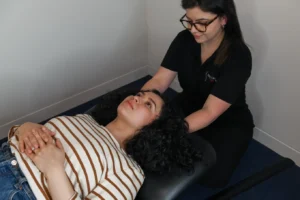
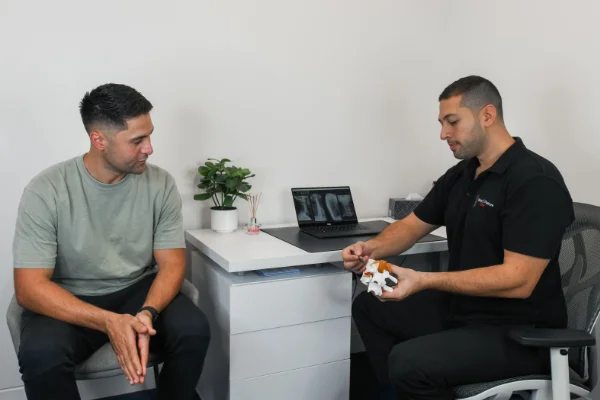
The physical examination typically includes posture analysis, range of motion testing, and palpation of your spine and surrounding muscles. Your chiropractor will observe how you move, checking for asymmetries, restrictions, or compensatory patterns. Specific orthopedic and neurological tests help determine whether nerve involvement is present and whether your symptoms originate primarily from joints, muscles, or other structures. In some cases, X-rays or other imaging may be recommended to visualize your spinal alignment and rule out conditions that require different management approaches. Spine And Posture Care uses this comprehensive assessment process to develop an accurate understanding of what’s causing your upper back stiffness and to create an appropriate treatment plan tailored to your specific needs.
Common Conditions That Cause Upper Back Stiffness
Thoracic Spine Dysfunction and Postural Problems
Several specific conditions commonly manifest as upper back stiffness. Thoracic spine dysfunction, characterized by restricted joint movement between vertebrae, ranks among the most frequent causes. This condition often develops gradually from sustained poor posture, creating areas where individual spinal segments lose their normal mobility. The joints become stiff and inflamed, triggering protective muscle spasms that further limit movement and create the sensation of tightness that won’t release no matter how much you stretch.
Postural syndromes represent another major category of upper back problems. Forward head posture and rounded shoulders, often called upper crossed syndrome, create characteristic patterns of muscle imbalance and joint stress in the thoracic region. The muscles between your shoulder blades become weak and overstretched, while chest muscles tighten and pull your shoulders forward, creating a self-perpetuating cycle of dysfunction. Rib joint restrictions, where the ribs attach to the thoracic vertebrae, also frequently contribute to upper back stiffness and can create sharp pain with breathing or twisting movements. Identifying which of these conditions is driving your symptoms allows for targeted treatment that addresses the root cause rather than just temporarily relieving surface-level tightness.
Prevention Strategies to Maintain Upper Back Flexibility
Preventing upper back stiffness requires attention to daily habits and ergonomics. Creating a workstation that supports good posture forms the foundation of prevention. Your computer screen should sit at eye level to prevent forward head posture, and your chair should support the natural curves of your spine. Taking regular breaks to stand, move, and change positions every 30 to 45 minutes prevents the sustained static postures that contribute to stiffness. Even brief movement breaks, lasting just one or two minutes, can significantly reduce the accumulation of tension in your upper back.
Incorporating specific exercises and stretches into your routine helps maintain thoracic spine mobility. Exercises that promote extension and rotation of the upper back counteract the flexed, rounded positions most people assume throughout the day. Strengthening the muscles between your shoulder blades while stretching tight chest muscles helps restore balanced posture and reduces stress on your thoracic spine. Breathing exercises that emphasize full rib cage expansion not only improve respiratory function but also maintain mobility in the joints connecting your ribs to your spine. Spine And Posture Care provides patients with personalized exercise programs designed to prevent recurrence of upper back stiffness and maintain the improvements achieved through chiropractic treatment.
Conclusion
Recognizing when upper back stiffness has moved beyond ordinary muscle tension into territory that warrants professional assessment can be the key to preventing chronic problems and restoring full function. Persistent stiffness, limitations in daily activities, associated symptoms like breathing difficulty, and progressive worsening all signal that your thoracic spine needs expert evaluation. Addressing these issues early through comprehensive chiropractic assessment and treatment prevents the development of compensatory problems throughout your entire spine and supports optimal overall health and wellbeing.
FAQs
How long does upper back stiffness typically last before I should seek help?
If your upper back stiffness persists beyond two to three weeks despite rest and self-care measures, or if it’s progressively worsening, professional assessment is recommended. Addressing stiffness early often leads to faster resolution and prevents chronic problems.
Can upper back stiffness cause headaches?
Yes, thoracic spine dysfunction and upper back stiffness frequently contribute to tension headaches and even migraines. The muscles and nerves in your upper back connect to your neck and head, creating patterns of referred pain.
Is it normal for upper back stiffness to affect my breathing?
While common, it’s not normal for stiffness to restrict breathing. Since ribs attach to thoracic vertebrae, spine restrictions can limit rib expansion. This symptom indicates you would benefit from professional evaluation.
What’s the difference between muscle soreness and stiffness that needs treatment?
Normal muscle soreness improves within days and responds to rest and gentle movement. Stiffness requiring treatment persists for weeks, progressively worsens, limits daily activities, or is accompanied by other symptoms like numbness or breathing difficulty.
Will I need ongoing treatment for upper back stiffness?
Treatment duration varies based on how long the problem has existed and its severity. Many patients experience significant improvement within weeks, transitioning to maintenance care or self-management strategies to prevent recurrence and maintain results.