

Slouched shoulders and a forward head build up slowly, often over years at a desk. So it is fair to ask how long it takes to correct poor posture once the work begins. The honest answer is weeks for the first signs, and months for lasting change.
As a clinic offering posture correction in Sydney, Spine & Posture Care guides patients through each stage. This article sets out a realistic recovery timeline and what speeds it up.
What Correcting Posture Actually Means
Posture is not a single switch to flip. It is the sum of habits, muscle strength and joint mobility working together every day.
Correcting it means retraining all three. Weak muscles need to strengthen, stiff joints need to move freely, and daily habits need to change.
This is why a quick fix rarely lasts. A full guide to posture correction shows how these pieces fit together over time.
The Honest Answer: A Realistic Posture Correction Timeline
Most people want a single number. The reality is a series of stages. The chiropractors at Spine & Posture Care usually map progress across three phases.
Weeks 1 to 4: Awareness and Early Relief
The first month is mostly about awareness. Tension in the neck and shoulders often starts to ease. Posture improves when consciously held, then slips once attention drifts.
Months 1 to 3: Stronger Muscles and New Habits
By the second and third month, the supporting muscles grow stronger. Sitting and standing tall begins to feel more natural. The new habits start to hold on their own.
Months 3 to 12: Lasting Structural Change
From three months onward, alignment holds with far less effort. Deeper change, especially after years of slouching, can take six to twelve months to settle fully.
What Decides How Long It Takes
No two timelines match, because several factors shape the pace of progress. Some people change quickly, while others need patience.
Key factors include:
- How long the poor posture has been present
- The severity of the imbalance at the start
- Daily desk hours and overall movement levels
- Consistency with exercises and habit changes
- Any existing pain or underlying condition
Spotting the warning signs of bad posture early tends to shorten the process. The longer a pattern sets in, the more retraining it takes to undo.

Can Posture Still Be Corrected as an Adult?
Adults often assume the window has closed. It has not. The body adapts to new demands at almost any age.
Progress can be slower than in teenagers, yet it remains very achievable. Many patients fix bad posture as an adult with a structured plan.
The team at Spine & Posture Care tailors each plan to the person’s spine, age and daily routine. That focus makes adult posture change realistic and lasting.
Wondering where a posture problem sits on this timeline? A posture assessment measures the starting point and sets realistic milestones. Call (02) 8040 9922 or book a posture assessment online to begin with a clear plan.
Quick Reference: Posture Correction Timeline by Stage
This table sums up what to expect at each stage. Treat it as a general guide, not a fixed rule.
| Stage | Timeframe | What Changes | What to Expect |
|---|---|---|---|
| Early | Weeks 1 to 4 | Awareness grows, tension eases | Posture feels better, then slips |
| Building | Months 1 to 3 | Muscles strengthen, habits form | Sitting and standing tall feels easier |
| Lasting | Months 3 to 6 | Alignment holds more naturally | Good posture needs less conscious effort |
| Long-term | 6 to 12 months | Structural and habit change settles | Posture holds without constant thought |
How to Speed Up Posture Correction
Consistency is the single biggest lever. Daily effort beats occasional long sessions every time.
Strengthening the core and upper back gives the spine the support it needs. Targeted exercises matter far more than generic stretching.
Frequent movement breaks stop old patterns from creeping back. Short, regular resets work better than one big daily correction.
Daily Habits That Make or Break Progress
Habits outside exercise sessions decide most of the outcome. Long static hours can undo good work fast. Sleep matters too. Good sleep and spinal alignment let the spine recover overnight.
Desk setup, phone use and bag weight all add up. Small daily choices either support the new posture or fight against it.
When to Get Professional Help
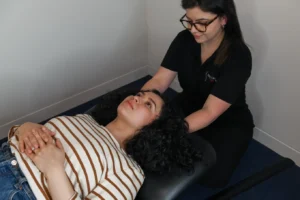
Some posture problems need more than self-help. Pain, numbness or a visible structural curve are signs to seek a proper assessment.
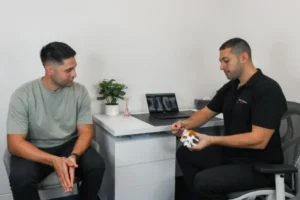
A professional can find the cause and set a safe, staged plan. This avoids months of guesswork and slow progress.
Australian guidance from healthdirect covers simple posture improvements. A chiropractor adds hands-on assessment and a program built around the individual.
Conclusion
So how long does it take to correct poor posture? Expect early relief within weeks and lasting change across three to twelve months. The exact timeline depends on the starting point and daily consistency.
The team at Spine & Posture Care helps Sydney patients reach each milestone and hold it. Many also address linked issues like upper back stiffness along the way. Steady habits, paired with expert guidance, make good posture stick.
Spine & Posture Care runs two Sydney CBD clinics, on Macquarie Street and at Barangaroo, open six days a week. Book a posture assessment through the contact page or call (02) 8040 9922 to start. The sooner the plan begins, the sooner the results hold.
Frequently Asked Questions
1. How long does it really take to fix years of bad posture?
Fixing posture that has built up over years usually takes between three and twelve months of consistent effort. The timeline reflects how long your body has held the old pattern. A habit set over a decade at a desk will not reverse in a fortnight. That said, you will likely notice early wins much sooner. In the first few weeks, neck and shoulder tension often eases and you become more aware of your alignment. Real structural change comes later, as muscles strengthen and your spine adapts to new demands. The biggest variable is consistency. People who do their exercises daily and adjust their sitting, sleeping and screen habits tend to reach lasting change closer to the three to six month mark. Those who practise occasionally take longer. Severity also matters, since a mild rounding corrects faster than a long-standing forward head and rounded shoulders. A professional assessment can give you a clearer personal estimate based on your starting point and daily routine.
2. Will I see any improvement in my posture in the first month?
Yes, most people notice meaningful changes within the first four weeks, though they may not be the changes you expect. Early improvement is usually about awareness and comfort rather than a fixed new posture. In the first week or two, you tend to catch yourself slouching more often and correct it. Many people also feel less tension across the neck, shoulders and upper back as tight muscles begin to release. What you will not see yet is posture that holds on its own. When you stop concentrating, your body still drifts back to the old position. This is completely normal at this stage, because the supporting muscles have not strengthened enough to take over automatically. Think of the first month as laying the foundation. The awareness and early relief you build now make the strengthening phase more effective. Sticking with daily habits during these first weeks sets the pace for everything that follows, so consistency early on really pays off later.
3. Can a chiropractor fix my posture faster than doing exercises alone?
A chiropractor can often speed up posture correction, mainly by making your own efforts more effective. Exercises alone work, but progress slows when stiff joints or a missed underlying cause hold you back. A chiropractor assesses your spine, identifies which joints are restricted and which muscles are weak, then targets them directly. Hands-on treatment can restore movement in stiff areas, which makes the strengthening exercises easier and more productive. Just as importantly, a professional gives you the right exercises for your specific pattern rather than generic stretches that may not address your problem. This focus tends to shorten the timeline and reduce wasted effort. It also helps you avoid plateaus, where progress stalls because one piece of the puzzle was overlooked. That said, treatment is not a passive shortcut. The exercises and daily habit changes still do the heavy lifting for lasting results. The best outcomes usually come from combining professional assessment and hands-on care with consistent home exercises and better daily habits.
4. Is it too late to correct my posture in my 40s or 50s?
No, it is not too late to improve your posture in your 40s, 50s or beyond. The body keeps adapting to the demands placed on it at any age, so strengthening weak muscles and mobilising stiff joints still works. Progress may be a little slower than for a teenager, because tissues are less elastic and the pattern has usually been present for longer. The improvement, though, is very real and worth the effort. Better posture at this stage often brings noticeable benefits, including less neck and back tension, easier breathing and improved confidence. Some age-related changes, such as long-standing spinal changes, may not fully reverse. Even then, posture and comfort can improve significantly with the right plan. The key is a program matched to your body rather than a one-size-fits-all routine. A chiropractor can assess what is flexible and what is fixed, then focus on the areas with the most potential. Consistency matters even more with age, so steady daily habits make the difference.
5. Why does my good posture keep slipping back to slouching?
Your posture keeps slipping because awareness develops well before strength and habit do. In the early stages of correction, you can hold a good position when you think about it, but the muscles that maintain that position are not yet strong enough to do it automatically. The moment your attention moves to work or your phone, the body returns to its most familiar, low-effort position, which is usually the slouch. This is a normal and expected part of the process, not a sign of failure. The fix is to keep building the supporting muscles and to set up reminders that prompt regular resets. Frequent movement breaks, a well-set-up desk and posture cues throughout the day all help. Over weeks of consistent practice, the upright position gradually becomes the default that needs less conscious effort. If your posture keeps collapsing despite months of effort, it is worth getting assessed, since stiff joints or weak deep muscles may be holding you back.
6. How often do I need to do posture exercises to see results?
For most people, short daily practice produces the best and fastest results. Posture correction relies on repetition, so a few minutes each day beats a single long session once a week. Daily work trains the supporting muscles and reinforces the new movement patterns until they become automatic. A practical routine often includes a small set of targeted strengthening and mobility exercises performed once or twice a day. These might take only five to ten minutes in total. Just as important are the frequent micro-resets through the day, where you check and correct your position, especially during long periods at a desk. Quality matters as much as frequency. Exercises done with good form and matched to your specific weaknesses work far better than random stretching. This is where professional guidance helps, since a tailored program avoids wasted effort. Consistency over weeks and months is what locks in the change. If you keep the daily habit going, most people see steady, visible improvement within one to three months.