
Level 4, Suite 4.02, 139 Macquarie Street, Sydney, NSW 2000
Level 35, 100 Barangaroo Ave, Sydney, NSW 2000 (Tower One)

Written by Mark El-Hayek
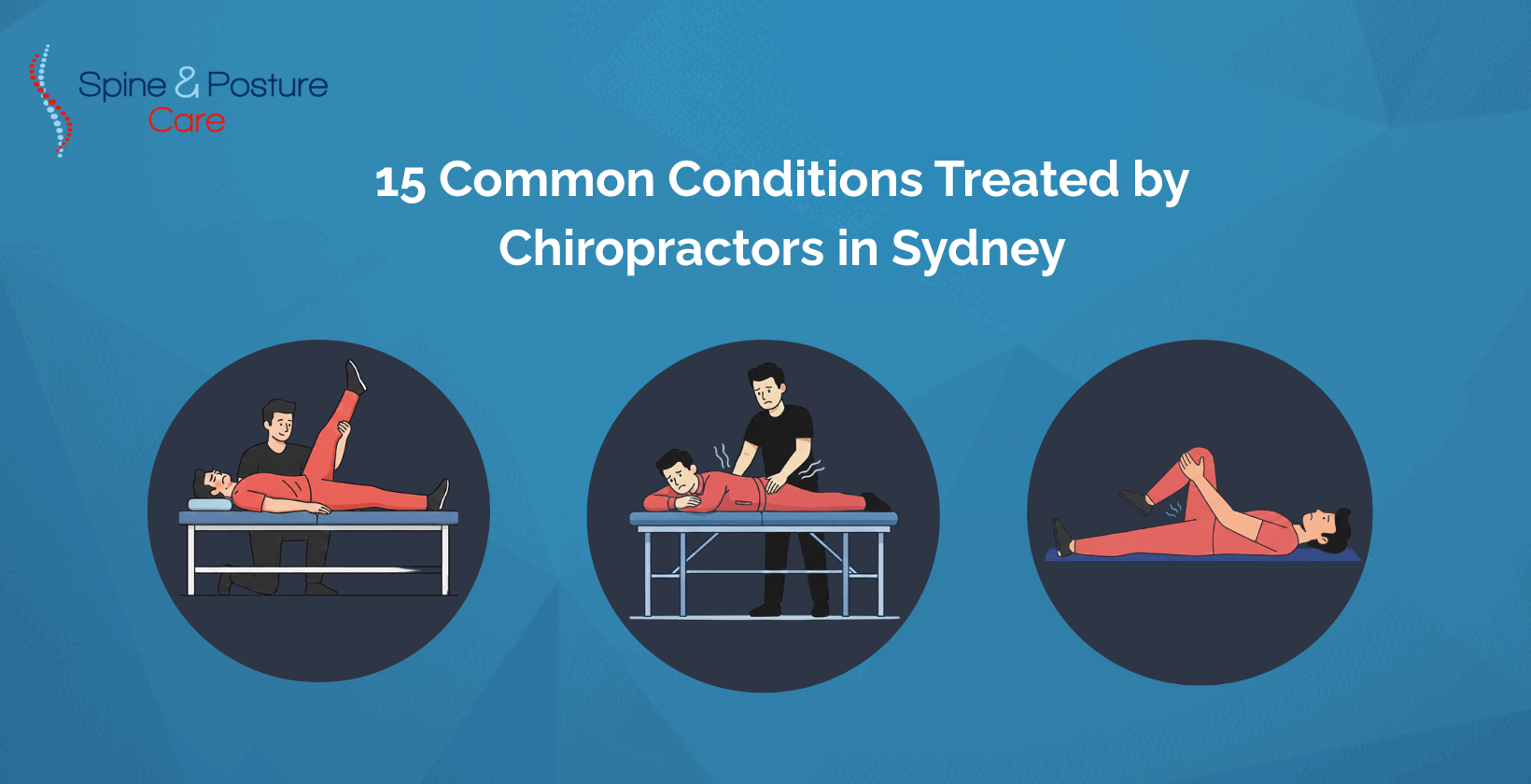
The 15 common conditions treated by chiropractors are listed below.
Chiropractors treat musculoskeletal conditions like back and neck pain, sciatica, herniated discs, scoliosis, whiplash, joint pain, restricted movement, headaches, sports injuries, and pregnancy-related discomfort. Using spinal manipulation, joint mobilisation, and soft-tissue therapy, they address issues from lumbar or cervical dysfunction, poor posture, trauma, or spinal curvature, improving pain, mobility, and overall posture.
Shoulder, hip, and knee pain, as well as general joint pain, often result from sports injuries or mechanical overload, while overuse injuries and pregnancy-related discomfort arise from repetitive strain and biomechanical changes. These conditions can cause limited mobility, persistent pain, and postural imbalances affecting daily life and long-term musculoskeletal health. Consulting a licensed chiropractor helps restore function, reduce pain, and maintain wellness through professional assessment, safe manual therapy, and personalised rehabilitation.

Back pain is a musculoskeletal discomfort characterised by soreness, stiffness, or strain in the spinal joints, intervertebral discs, nerves, or surrounding muscles of the upper, mid, or lower back. This pain commonly appears as lower back pain in the lumbar spine, mid-back pain in the thoracic region, or upper back pain in the cervical spine.
Back pain is caused by mechanical stress from repetitive movements such as bending or lifting, lumbar disc irritation, and nerve-related issues like radiculopathy or facet joint compression. Other factors like postural imbalances and inefficient biomechanics increase stress on spinal structures which intensifies discomfort in the back. Chiropractors use targeted lumbar and thoracic spinal adjustments along with non-surgical therapies such as flexion-distraction and the McKenzie Method to treat back pain. Patients can get back pain relief by combining chiropractic care with back pain exercises like lumbar extension drills that reduce inflammation, improve joint mobility, and support long-term functional recovery.
Neck pain is a musculoskeletal condition involving discomfort, tightness, or irritation in the cervical spine and its surrounding muscles, ligaments, and nerves. This pain is caused by cervical misalignment from poor posture, muscle tension from stress or improper ergonomics, and nerve irritation from pressure on the cervical nerves. Persistent postural strain also intensifies this condition by limiting the range of motion in the cervical region.
Patients can treat neck pain through chiropractic care like cervical spinal adjustments targeting C1 – C7 segments, trigger-point release in the upper trapezius or levator scapulae, and ergonomic improvements such as reducing forward-head posture during desk work. A chiropractor’s neck stiffness relief program also helps you prevent recurrence of the pain by emphasising neck mobilisation, stretching routines, and lifestyle guidance.
Sciatica is a neuropathic condition characterised by radiating leg pain, numbness, or tingling caused by compression or irritation of the sciatic nerve, resulting from lumbar disc herniation or piriformis syndrome. These symptoms develop when lumbar nerve roots become impinged by disc bulges, muscular tightness, or inflammatory pressure, which causes pain signals to travel along the sciatic pathway into the lower back, hips, and legs. Patients can get sciatica pain relief through sciatic nerve chiropractic care programs that address the main cause of the problem through non-invasive methods like spinal manipulation and lifestyle modifications.
Chiropractors cure sciatica by relieving nerve pressure, reducing disc inflammation, and restoring proper spinal alignment. These outcomes are achieved through mechanical lumbar decompression, lumbar facet joint mobilisation, and myofascial release applied to the paraspinal muscles. Chiropractic care supports nerve function and improves movement patterns, unlike physiotherapy which focuses on muscle strengthening and mobility exercises.
A herniated disc occurs when the inner gel-like nucleus of an intervertebral disc protrudes through the outer fibrous annulus and forms a bulge or full rupture in the lumbar or cervical spine, compressing nearby nerves. A bulge mildly presses on nearby nerves, while a rupture can compress nerves in the lumbar spine (affecting the lower back and legs) or cervical spine (affecting the neck and arms). Nerve root compression from this protrusion causes radiating pain, numbness, and muscular weakness in the lower back, legs, neck and arms.
Herniated disc treatment includes chiropractic care with conservative methods such as targeted spinal decompression, joint mobilisation, and lifestyle modifications that directly reduce nerve compression and inflammation. Structured exercises like glute bridges or hamstring stretches and ergonomic adjustments such as using a lumbar-support chair or adjusting workstation height, complement this spinal disc adjustment by supporting gradual functional recovery while improving spinal stability.
Scoliosis is a musculoskeletal condition characterised by an abnormal lateral curvature of the spine, often accompanied by vertebral rotation and postural asymmetry in the shoulders or pelvis. This abnormal curvature can range from mild postural asymmetry to severe spinal deformity, affecting posture, balance, and overall musculoskeletal function. Scoliosis may be structural, caused by congenital defects or adolescent idiopathic changes in the vertebrae, or functional, resulting from postural imbalances, muscle weakness, or biomechanical stress without vertebral deformity. Regular monitoring of the spinal curve is essential to track progression, prevent complications, and maintain long-term musculoskeletal health, as worsening curvature can affect posture and spinal mechanics.
Scoliosis chiropractic treatment reduces curvature stress and supports spinal alignment through targeted spinal adjustments such as gentle lateral flexion and rotational mobilisations with core-stabilising exercises like planks, bridges, and pelvic tilts. These non-invasive procedures complement medical intervention by reducing discomfort and enhancing spinal and musculoskeletal function.
Whiplash is a cervical musculoskeletal injury caused by sudden hyperextension and hyperflexion of the neck, resulting in ligament strain, inflammation, and associated symptoms such as stiffness, headaches, and reduced neck mobility. It affects the cervical ligaments, muscles, and facet joints of the upper and mid-neck region, which leads to localised pain, tension, and restricted range of motion in that specific area.
Chiropractic management of whiplash involves precise cervical spinal adjustments to realign the neck vertebrae and targeted soft-tissue therapies on the trapezius, levator scapulae, and sternocleidomastoid muscles to relieve tension. Guided movement retraining exercises are also used to restore normal neck range of motion and proper biomechanics. These interventions help reduce pain, alleviate muscle tension, improve joint mobility, and support functional rehabilitation without relying on invasive procedures. Patients experience gradual restoration of functional movement, improved posture, and reduced headache intensity through consistent, clinically guided neck strain chiropractic care.
Shoulder pain is discomfort, stiffness, or limited range of motion in the shoulder joint and surrounding structures, caused by injuries such as tendonitis or bursitis, traumatic events like dislocations or fractures, or nerve compression. It commonly arises from rotator cuff strains, subacromial impingement, or scapular dysfunction, which can lead to pain during movement, weakness in the shoulders, and discomfort in the arm or upper back.
Chiropractic care for shoulder pain improves joint mobility, corrects posture-related mechanics, and addresses strain through targeted glenohumeral and acromioclavicular joint adjustments and soft-tissue therapy focused on the rotator cuff, deltoid, and scapular stabilisers. These approaches directly address abnormal loading patterns, provide shoulder pain relief, and support recovery from muscular and ligamentous stress. Integrating chiropractic rotator cuff treatment with shoulder mobility exercises like pendulum swings and wall slides helps restore range of motion, strengthen supporting muscles, and improve joint stability of the shoulder.
Hip pain is the discomfort or restricted movement in the hip joint and surrounding muscles caused by pelvic misalignment, gait irregularities, osteoarthritis-related stiffness, or tightness in the hip flexors and gluteal muscles. These biomechanical imbalances can create compensatory strain in the lumbar spine and lower extremities, which leads to pain during movement or daily activities.
Hip joint chiropractic care improves pelvic alignment, enhances hip joint mobility, and restores muscular balance through spinal and pelvic adjustments combined with exercise-focused therapy targeting hip flexors, glutes, and surrounding stabilisers. This hip alignment treatment also lowers gait-related strain, alleviates joint stiffness, and reduces discomfort over time.
Knee pain refers to discomfort, inflammation, or reduced mobility in the knee joint and its surrounding soft tissues. It often arises from patellofemoral dysfunction, ligament strains, or compensatory movement patterns caused by hip or lower back issues which result in pain during weight-bearing or dynamic activities. These disruptions also contribute to swelling, discomfort during flexion or extension, and reduced functional mobility.
Chiropractic knee treatment restores proper alignment, improves mobility, and reduces pain through joint mobilisation, kinetic-chain analysis, and stability-focused exercises like quad sets, straight-leg raises, mini-squats, and clamshells. Patients can also get knee pain relief by improving neuromuscular coordination through knee mobility exercises like heel slides and functional training of the quadriceps, hamstrings, and hip stabilisers.
Joint pain is a musculoskeletal condition characterised by discomfort, stiffness, or reduced function in one or more synovial joints, leading to limited mobility and discomfort during daily activities. This discomfort results from arthritis, inflammation of the joint lining and surrounding soft tissues, wear-and-tear degeneration, or misalignment-related movement restrictions.
Chiropractic joint therapy focuses on improving synovial joint health, restoring proper alignment and mobility, and increasing muscular support through spinal or peripheral joint adjustments and exercise-based therapy such as stabilisation drills for surrounding muscles. This chiropractic treatment is particularly beneficial for patients with arthritis, as it addresses underlying mechanical and postural issues while providing long-term functional relief.
Restricted movement refers to a limited range of motion in joints or the spine. This discomfort is often caused by spinal stiffness, soft-tissue restrictions, and posture-related mobility limitations such as tight paraspinal muscles, shortened hip flexors, and restricted thoracic rotation. These restrictions impact daily activities and overall functional performance of the spine and joints, limiting movement and quality of life.
Chiropractic care addresses restricted movement through spinal and joint mobilisation, targeted manual therapy, and corrective exercises like thoracic extensions and hip flexor stretches. This comprehensive chiropractic range of motion therapy is designed to stretch tight tissues, improve joint movement, and retrain postural patterns. Patients with restricted movement can restore fluid movement, reduce discomfort, and improve overall functional efficiency through this combination of manual therapy and exercises.
Headaches are a common neurological and musculoskeletal condition causing pain or pressure in the head, scalp, or neck regions. This discomfort arises from muscle tightness, cervicogenic pain due to neck joint dysfunction, and trigger points in the upper cervical and shoulder muscles. Severe forms of headache, such as migraines, develop when increased neurological sensitivity combines with cervical dysfunction that amplifies pain intensity and frequency.
Chiropractic care targets these underlying issues by improving posture, reducing muscular tension, and restoring neck alignment to address recurring pain patterns. Chiropractic migraine therapy also includes drug-free strategies like targeted cervical adjustments, soft-tissue therapy, and posture-corrective exercises. This therapy alleviates current discomfort and provides long-term neck and head pain care.
Sports injuries are activity-related injuries that occur during physical activity, affecting muscles, ligaments, and joints. They typically result from sudden trauma to the muscles or joints, overuse of tendons and soft tissues, or repetitive strain in the knees, shoulders, or lower back. Other factors that cause sports injuries include muscle strains in the hamstrings or calves, ligament sprains in the ankle or knee, and joint overloading in weight-bearing areas such as the hips and spine.
These injuries disrupt normal biomechanics, reduce range of motion, and can increase the risk of further musculoskeletal issues. Chiropractic care provides recovery from sports injuries by restoring joint alignment, improving muscular coordination, and applying performance-focused rehabilitation through manual therapy and corrective strengthening exercises. Athletes experience faster recovery, reduced injury recurrence and better functional performance through spinal adjustments, corrective exercises, and performance-focused strategies.
Overuse injuries are the injuries that develop from repetitive strain, tendon overload, or chronic micro-trauma, often affecting joints, tendons, and soft tissues. These injuries typically involve inflammation of tendons, ligaments, or joint capsules, gradual tissue weakening, and functional limitations such as reduced range of motion or pain during repetitive activities. Repetitive strain injuries (RSI) represent a common subtype caused by continuous micro-tears and tendon stress.
RSI and overuse injuries disrupt normal biomechanics and can perpetuate pain patterns if left unmanaged. Chiropractic care provides overuse injury treatment, repetitive motion injury relief and chronic strain therapy through soft-tissue therapy, ergonomic corrections, and progressive loading strategies. This overuse and RSI treatment chiropractic treatment plan restores mobility, improving long-term function, and offers targeted relief.
Pregnancy-related discomfort refers to musculoskeletal and postural changes like pelvic misalignment, lower-back pressure, and ligament laxity from hormonal shifts during gestation. These changes create persistent discomfort that affects posture and daily function by intensifying muscle strain and joint tension.
Pregnancy pain relief chiropractic program includes pelvic balancing and Webster-technique-based approaches that enhance biomechanical stability and reduce musculoskeletal stress. These interventions improve posture, support ligament integrity, promote better functional movement, and prepare the body for labour. Expectant mothers get immediate pain relief and long-term musculoskeletal support through gentle sacroiliac and lumbar adjustments and targeted exercises such as pelvic tilts and hip-opening stretches.
The benefits of chiropractic treatment are pain reduction, posture correction, mobility improvement, stiffness reduction, and drug-free care. Pain reduction is achieved through precise joint mobilisation, and posture correction involves detailed assessments, ergonomic guidance, and corrective exercises that restore spinal balance.
Benefits like improving mobility rely on spinal adjustments combined with stretching and strengthening routines that are also supported by visual assessments and range-of-motion tracking to maintain long-term joint flexibility. Stiffness reduction and drug-free care are facilitated by soft tissue therapy and non-pharmacological interventions to promote natural healing and overall musculoskeletal health without reliance on medications.

Chiropractic adjustments directly address spinal misalignments, nerve compression, and musculoskeletal tension by applying controlled manipulations and mobilisations to affected joints and soft tissues. These pain relief chiropractic methods help in chronic pain management and nerve pressure reduction for conditions such as back pain, neck pain, and headaches. Chiropractic interventions with at-home strategies like targeted stretching and posture correction assist in maintaining mobility and preventing symptom recurrence. Consistent chiropractic care also increases long-term outcomes by supporting proper spinal alignment, optimising nervous system function, and reinforcing overall musculoskeletal health.
Chiropractic care improves posture habits and spinal alignment by correcting joint restrictions and muscle imbalances through detailed posture assessments, spinal adjustments, and soft-tissue mobilisation. Visual comparison techniques like plumb line analysis or posture photography, combined with posture correction exercises such as core stabilisation and scapular retraction, reinforce proper backbone alignment and reduce musculoskeletal strain. Patients can improve overall spinal health and reduce the risk of chronic pain with consistent follow-up sessions and at-home posture routines to maintain these corrections.
Chiropractic adjustments such as lumbar joint mobilisations and targeted flexibility exercises like thoracic spine extensions enhance joint flexibility, increase range of motion and improve functional movement. These manual adjustments mobilise restricted joints and stretch surrounding soft tissues to relieve stiffness and tension. Mobility assessments, including goniometer measurements and before/after posture or movement illustrations, also help clinicians to track improvements and adjust corrective exercises accordingly. Patients can get long-term spinal alignment and optimal joint health by maintaining these mobility improvements through regular stretching, core strengthening routines and ergonomic awareness.
Chiropractic care relieves muscle and joint stiffness by combining accurate spinal and joint adjustments with myofascial release and targeted stretching routines. Chiropractors also offer stiffness relief and guide patients in maintaining the correct spinal alignment throughout daily activities with movement assessments and palpation techniques. Patients can sustain improved flexibility, reduce discomfort, and prevent recurrence of stiffness by adopting lifestyle strategies such as regular mobility exercises, workstation modifications, and progressive stretching routines.
Chiropractic care provides drug-free pain relief and offers a natural alternative to medication by using spinal adjustments, soft tissue mobilisation, and targeted exercises to reduce musculoskeletal tension and restore joint function. These procedures reduce dependency on pharmaceuticals by addressing the root causes of pain. Patient success stories of non-pharmaceutical treatment highlight improvements in chronic back pain, neck stiffness, and headaches without side effects. Combining ergonomic guidance, posture optimisation, and lifestyle integration further increases the benefits of holistic chiropractic care.
Patients can get chiropractic treatment in Sydney by choosing licensed, experienced practitioners. Our chiropractic centres in Sydney CBD help patients by connecting individuals with thoroughly reviewed, credentialed chiropractors.
We also offer individualised consultations to provide pain relief and improve spinal function in a comfortable environment by assessing each patient’s unique posture, movement patterns, and musculoskeletal imbalances. You can easily book an online consultation with our experienced chiropractors, who specialise in personalised care plans and evidence-based techniques for optimal health outcomes.
8 signs that indicate you should seek chiropractic care are listed below.
Yes, chiropractic treatment is safe when performed by licensed practitioners who utilize proper spinal adjustment techniques and evidence-based care. Patients are encouraged to provide a complete medical history, including previous injuries, surgeries, or existing conditions, to get effective treatment with minimal risk.
Expert chiropractic care provides effective treatment for back pain, headaches, sciatica, and neck pain. Individuals should seek immediate consultation if they experience unusual pain, dizziness, or discomfort during or after a session, as early reporting helps maintain safety and optimise treatment outcomes.
GET EFFECTIVE POSTURE CORRECTION
Learn how posture correction can help improve your posture
Fill Your details below to register your interest
Fill Your details below to register your interest