Sciatica: Definition, Causes, Symptoms, Diagnosis, and Treatment

Written by Mark El-Hayek
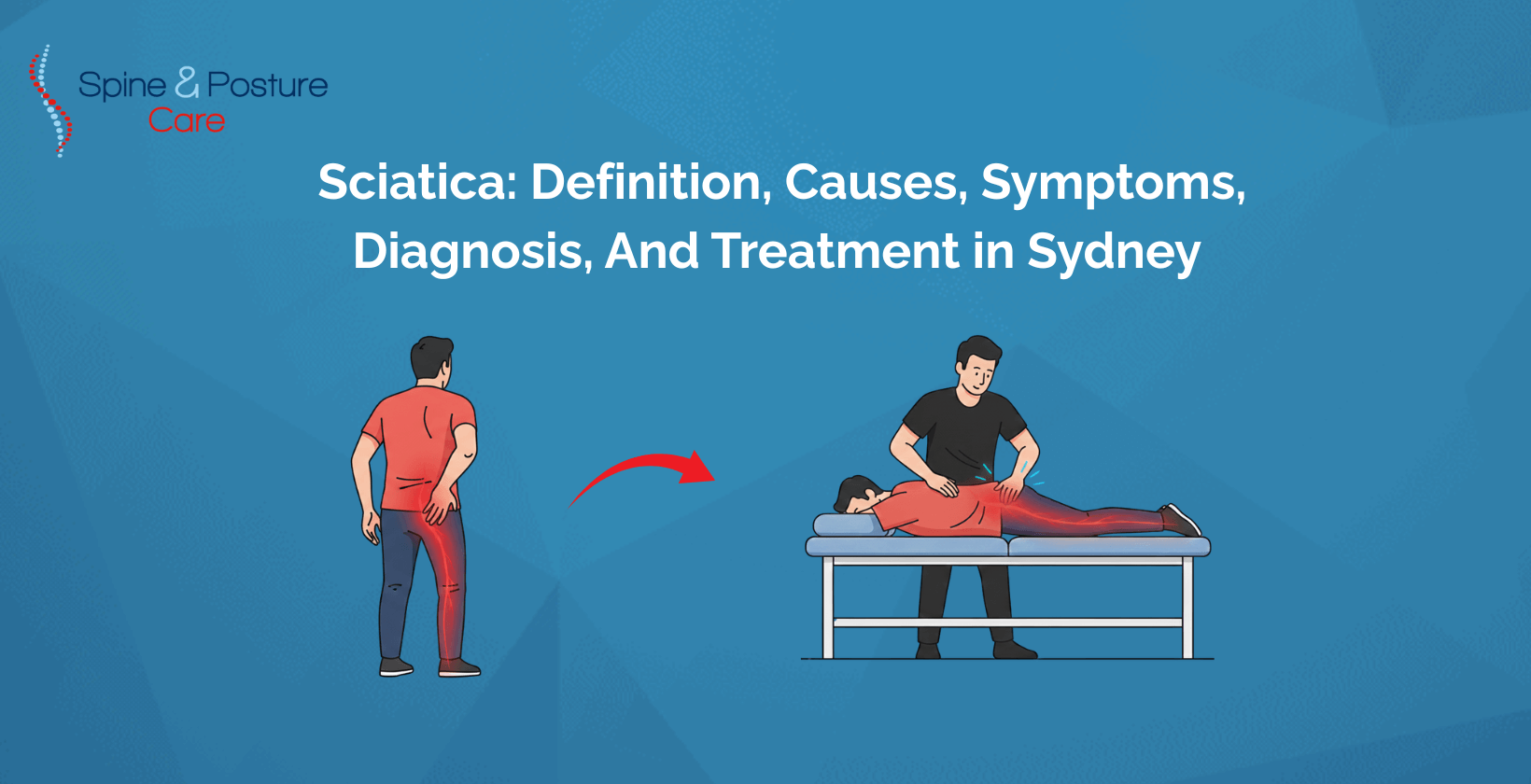
Sciatica is a neuropathic pain condition caused by compression or irritation of the sciatic nerve. The condition presents with sharp, shooting pain, numbness, or weakness that radiates along the leg, distinguishing it from general back pain, which remains localized.
Sciatica occurs when herniated discs, degenerative disc disease, foraminal stenosis, or spondylolisthesis compress your lumbar or sacral nerves, or due to piriformis syndrome, osteoarthritis, injury, infection, or pregnancy. It causes sharp radiating pain, numbness, tingling, and muscle weakness that worsen with sitting, standing, coughing, or sneezing.
Early diagnosis with clinical tests and MRI or CT scans guides treatment. In Sydney CBD, you can access physiotherapy, chiropractic care, osteopathy, massage, spinal decompression, acupuncture, dry needling, posture correction, and core strengthening, with medications, injections, or surgery used only if necessary.
Chiropractic spinal manipulation provides greater short-term pain relief and faster recovery in patients with acute back pain and sciatica from disc protrusion, as demonstrated by randomized controlled trials in the 2025 study “Effectiveness of Non-Surgical Interventions for Patients with Chronic Sciatica: A Systematic Review with Network Meta-Analysis” published in the Journal of Pain.
What Is Sciatica?
Sciatica, also known as lumbar radiculopathy, is a form of nerve pain characterized by tingling, numbness, and weakness that occurs when the sciatic nerve, the largest and longest nerve in the human body, is compressed, irritated, or inflamed. The sciatic nerve originates from the lumbar spine and sacral roots (L4–S3), forming the longest and thickest nerve in the human body that travels from the lower back through the buttocks and down the posterior leg into the foot. Sciatic nerve irritation or compression along this pathway leads to sciatica, which progresses through four clinical stages: the acute or early stage, the subacute stage, the chronic stage, and the recurrent or degenerative stage.
Sciatica is a type of back pain, but it differs from general back pain in both its cause and symptom pattern. Sciatica is caused by direct pressure on the sciatic nerve, while general back pain arises from musculoskeletal strain and joint inflammation in the spine. Symptoms of sciatica include radiating leg pain, loss of sensation, and motor weakness along the nerve pathway, whereas back pain is localized pain to the lower back without radiation.
The annual incidence of sciatica in the general population is estimated to range between 1% and 5%, affecting both men and women, while rarely occurring before the age of 20, according to the 2022 study “Risk Factors, Prevention, and Primary and Secondary Management of Sciatica: An Updated Overview” published in Cureus.
What Are the Main Causes of Sciatica?
The main causes of sciatica are a herniated or slipped disc, degenerative disc disease, spinal stenosis, foraminal stenosis, and spondylolisthesis. Other causes and contributing conditions of sciatica include piriformis syndrome, traumatic injury, osteoarthritis, tumors and infections, pregnancy, cauda equina syndrome, and conus medullaris syndrome.
Nearly 90% of sciatica cases are caused by a herniated disc leading to nerve root entrapment, while lumbar stenosis and spinal tumors are less common but clinically significant causes, as reported in the 2007 study “Diagnosis and Treatment of Sciatica” published in the BMJ.
Herniated or slipped discs are one of the most common structural causes of sciatica and lower back pain, which occurs when the soft inner material of a spinal disc pushes through its outer layer and irritates nearby nerve roots. This pressure on the nerve produces sharp, shooting pain that radiates down the leg, often accompanied by numbness or tingling sensations.
Degenerative disc disease develops gradually with age or repetitive strain on the spine, which leads to disc dehydration, loss of cushioning, and stiffness in the lower back. Degenerative disc disease often causes dull, aching pain that flares during movement or prolonged sitting but eases when lying down or walking.
Spinal stenosis occurs when the spinal canal narrows and puts pressure on the spinal cord or nerve roots, typically due to age-related bone changes or disc degeneration. Symptoms include radiating leg pain, numbness, weakness, and difficulty standing or walking for long periods. Pain alleviates when leaning forward or sitting, as this posture temporarily relieves pressure on the nerves.

Herniated or Slipped Disc
A herniated disc, also known as a slipped disc or prolapsed disc, is a spinal disc disorder that is a main cause of sciatica. A slipped disc occurs when the soft, jelly-like center of a spinal disc (nucleus pulposus) is forced through a tear in its tough outer layer (annulus fibrosus). This protrusion exerts mechanical pressure on the sciatic nerve and releases inflammatory mediators that irritate the nearby nerve roots, resulting in sciatica, radiating pain, and loss of sensation along the nerve pathway.
A prolapsed or slipped disc can be diagnosed using magnetic resonance imaging (MRI), which clearly visualizes disc displacement, nerve impingement, and the extent of spinal canal narrowing. Disc herniation is prevented by postural alignment, core muscle stability, and safe lifting techniques to reduce spinal stress and prevent recurrence of nerve compression. A slipped disc can be treated through physiotherapy, anti-inflammatory medications, epidural steroid injections, and, in severe cases, microdiscectomy surgery to relieve nerve pressure and restore function.
Degenerative Disc Disease
Degenerative disc disease is a cause of sciatica in which the intervertebral discs break down, shrink, and lose hydration due to old age, which results in pain, stiffness, and nerve irritation along the spine. Degeneration of the disc can be caused by genetic predisposition, lifestyle factors such as smoking, poor posture, and physical inactivity, which break down disc tissue and limit spinal mobility.
This disease, in chronic cases, shows extreme lower back pain, radiating leg pain, and numbness caused by ongoing nerve compression. You can treat degenerative disc disease through exercise, chiropractic care, acupuncture, physiotherapy, image-guided injection therapy, and anti-inflammatory medication to reduce pain and improve spinal stability.
Spinal Stenosis
Spinal stenosis is a major structural cause of sciatica, which occurs when the spinal canal narrows and compresses the spinal cord or nerve roots, leading to sciatic nerve irritation and symptoms such as lower back pain, radiating leg pain, numbness, or tingling in the limbs. Spinal canal narrowing develops due to age-related degeneration, including bone spurs, spinal cysts, and thickened ligaments, or from congenital causes such as achondroplasia, spinal dysraphism, and congenital kyphosis.
Spinal stenosis and a herniated disc both can cause sciatica by compressing nerve roots in the lumbar region, but they differ in progression and onset. Spinal stenosis progresses gradually with ongoing canal narrowing, while a herniated disc produces sudden pain from disc rupture.
Canal narrowing and nerve compression are diagnosed with the help of spinal x-rays, computerized tomography (CT) scan, and magnetic resonance imaging (MRI). Spinal stenosis can be treated with physical therapy, pain relief medication, and steroid injections or surgery in severe cases to relieve pressure on the affected nerves.
Foraminal Stenosis
Foraminal stenosis is another cause of sciatica, in which the opening along the spine (foramen) becomes narrowed, commonly at the L4-L5 and L5-S1 levels, which puts pressure on the sciatic nerve roots and leads to nerve pain, weakness, and paresthesia. Magnetic resonance imaging (MRI) and computed tomography (CT) scans help diagnose the degree of foraminal narrowing and the extent of nerve impingement.
Foraminal stenosis treatment focuses on physiotherapy, non-steroidal anti-inflammatory medication, ice and heat therapy, and strengthening exercises to improve mobility and reduce discomfort. Surgical methods, like foraminotomy and laminectomy, are considered in severe cases where conservative management fails to relieve symptoms. You can prevent foraminal stenosis through strategies such as regular exercise, posture correction, and weight management, which help slow spinal degeneration and reduce the risk of foraminal stenosis progression.
Spondylolisthesis
Spondylolisthesis is a spinal condition in which one vertebra slips out of alignment with the vertebra below it, most commonly at the lumbosacral junction (L5-S1), which causes sciatica, mechanical instability, and lower back pain.
Spondylolisthesis, commonly known as vertebral slippage, results from degenerative changes, stress fractures, and birth defects that weaken the vertebral structure, compromise spinal alignment, and cause sciatica pain. The degree of vertebral displacement during spondylolisthesis can be diagnosed through X-rays, computed tomography (CT) scans, and magnetic resonance imaging (MRI).
Spondylolisthesis can be prevented by techniques, like posture correction, regular back exercises, and safe lifting techniques, which help prevent symptom progression and promote long-term spinal recovery. You can treat spondylothesis by physical therapy, core-strengthening exercises, and pain medication to relieve symptoms and restore spinal stability. Other methods, like bracing supports, help in mild cases by limiting excessive motion, while surgical correction can be recommended for severe vertebral displacement or persistent neural compression.
Piriformis Syndrome
Piriformis syndrome is a neuromuscular condition in which the piriformis muscle, located deep in the buttock region, irritates the nearby sciatic nerve, which causes buttock pain and pain down the leg similar to sciatica. Muscle spasms or tightness in the piriformis muscle act as a non-spinal cause of sciatica, producing numbness, tingling, and burning sensations that radiate to the leg.
Piriformis syndrome’s diagnosis relies on physical evaluations such as the FAIR (Flexion, Adduction, and Internal Rotation) test, which identifies nerve irritation through muscle tension. Piriformis syndrome is often misdiagnosed as spinal sciatica because of overlapping symptoms, making clinical assessment crucial. Piriformis syndrome can be treated using physical therapy, stretching exercises, massage therapy, and anti-inflammatory medication to reduce pain and inflammation.
Traumatic Injury
Traumatic injury refers to sudden physical damage from falls, car accidents, sports injuries, or blunt trauma that causes fractures, dislocations, or soft tissue damage in the lower spine or pelvis, which causes nerve inflammation.
Nerve inflammation from trauma produces sudden or delayed sciatica symptoms, depending on the extent of tissue injury and hemorrhage near the affected nerve roots. Traumatic Injury is treated using methods like pain management, anti-inflammatory medication, rehabilitation therapy, exercise, and physiotherapy to restore mobility and prevent long-term complications.
Osteoarthritis
Osteoarthritis is a degenerative joint disease marked by the breakdown of cartilage and the formation of bone spurs (osteophytes) that cause joint stiffness, pain, swelling, and reduced flexibility. Spinal Osteoarthritis is a type of osteoarthritis that develops with aging and can cause sciatic nerve impingement when cartilage degeneration and osteophyte growth narrow the spinal canal and irritate nearby nerve roots.
Osteoarthritis of the spine often develops alongside degenerative disc changes, where the breakdown of intervertebral discs increases friction between vertebrae and leads to facet joint inflammation. This combination of disc degeneration and osteoarthritis compresses nearby spinal nerves, resulting in sciatica symptoms such as lower back pain, radiating leg discomfort, stiffness, and weakness.
Osteoarthritis can be treated with the help of painkillers, physical therapy, targeted exercises, and low-dose radiation therapy. Spinal degeneration can be slowed down by weight management, posture correction, and routine low-impact activity, which helps reduce symptoms and slow spinal degeneration.
Tumors or Infections
Tumors and infections are abnormal conditions of the spinal tissues, vertebrae, or surrounding soft structures that can compress the sciatic nerve and cause sciatica. that affect the spine and cause sciatica. Tumors develop from cell proliferation, and infections result from invading microorganisms such as bacteria, fungi, or viruses. Tumors and infections in the spine show symptoms, like fever, unexplained weight loss, and progressive weakness, which indicate an urgent need for evaluation.
Treatment of sciatica caused by tumors and infections depends on the underlying cause, such as antibiotics or antivirals for infections, and chemotherapy, radiation, or surgical removal for tumors. Early intervention in spinal tumors and infections is essential to control disease progression, relieve nerve pressure, and improve patient prognosis.
Pregnancy
Pregnancy is a physiological condition that causes hormonal changes, uterine expansion, and postural shifts that trigger sciatica by increasing pressure on the lumbar spine and sciatic nerve. Sciatic nerve pain occurs in about 1% of pregnant patients during the second or third trimester, when the growing uterus alters spinal alignment and pelvic stability.
Sciatica has symptoms that include buttock pain, leg discomfort, and numbness that worsen with prolonged standing and movement. Scaitica pain in pregnancy can be managed by techniques like prenatal physical therapy, gentle stretching, and posture correction to relieve nerve compression. Sciatica in pregnancy can be prevented by strategies, like core-strengthening exercises, ergonomic sitting, and side-lying rest, which help manage sciatic pain and support maternal well-being throughout pregnancy.
Cauda Equina Syndrome
Cauda equina syndrome (CES)is a severe neurological cause of sciatica that occurs when the bundle of nerve roots at the lower end of the spinal cord becomes compressed. This compressed nerve differs from typical sciatica, which involves irritation of a single nerve root, because it affects multiple nerves simultaneously, leading to widespread sensory and motor impairment.
This impingement of nerves causes symptoms like low back pain, leg weakness, saddle anesthesia, urinary retention, and sexual dysfunction. Cauda equina syndrome (CES) can be treated by surgeries, like lumbar laminectomy, within hours, which improves neurological recovery, while delayed intervention increases the risk of irreversible paralysis and bladder dysfunction.
Conus Medullaris Syndrome
Conus medullaris syndrome (CMS) is another serious neurological cause of sciatica that results from compression or injury to the conus medullaris, the tapered end of the spinal cord located at the L1-L2 vertebral level. CMS involves both the spinal cord and lumbar nerve roots, leading to bilateral leg weakness, bowel and bladder dysfunction, and symmetrical sensory loss, unlike typical sciatica, which affects a single nerve root.
Conus medullaris syndrome and cauda equina syndrome clinically differ based on mixed spastic or flaccid weakness and a more abrupt onset of symptoms due to spinal cord damage. Early diagnosis of conus medullaris syndrome and prompt surgical decompression are essential to prevent irreversible neurological deficits and restore normal motor and sensory function.
What Are the Common Symptoms of Sciatica?
The common symptoms of sciatica include sharp pain radiating from the lower back to the leg, numbness or tingling sensation in the leg or foot, muscle weakness in the affected leg, and burning or shooting pain down the leg. Other symptoms of sciatica are pain that worsens when sitting or standing for long periods, difficulty moving or controlling the leg, persistent lower back pain on one side, and pain that intensifies during coughing or sneezing.
Sharp pain radiating from the lower back to the leg is the main symptom of sciatica, following the path of the sciatic nerve from the lower spine through the buttock and down the leg. This pain typically affects one side of the body and indicates direct nerve root entrapment rather than general muscle strain.
Numbness or tingling sensations in the leg or foot indicate nerve irritation or sensory disruption due to ongoing pressure on the sciatic nerve. These symptoms often accompany sharp or burning pain, affecting only one side of the body, and interfere with walking, balance, or coordination.
Muscle weakness in the affected leg develops when pinched nerve roots impair muscle control and movement. Weakness differs from mild difficulty lifting the foot to more serious issues, such as foot drop, based on the severity of nerve root impingement.

Sharp Pain Radiating From the Lower Back to the Leg
Sharp, radiating pain that travels from the lower back down to the leg is the hallmark symptom of sciatica, following the exact course of the sciatic nerve that extends from the lumbar spine (L4-S3) through the buttock and into the posterior thigh and calf.
This sharp pain affects one side of the body, which results in unilateral nerve root compression rather than generalized discomfort from muscular or referred pain sources. Unlike referred pain, which stays localized and diffuse, sciatic pain follows a precise dermatomal distribution, accompanied by numbness, tingling, or muscle weakness along the nerve pathway.
Numbness or Tingling Sensation in the Leg or Foot
Numbness or tingling in the leg or foot signals nerve irritation from sciatica occurs alongside sharp or burning pain that follows the path of the sciatic nerve. Sciatic nerve irritation typically causes unilateral sensory loss, meaning symptoms appear on one side of the body, unlike diabetic neuropathy, which generally affects both feet symmetrically due to metabolic nerve damage. This sensation affects walking, balance, and foot control, making it difficult to stand for long or perform coordinated leg movements.
Muscle Weakness in the Affected Leg
Muscle weakness is a sign of sciatica that occurs in the affected leg when disrupted nerve signals from the lumbar or sacral nerve roots impair muscle function in areas such as the gluteal muscles, hamstrings, calves, or foot.
Weakness in legs ranges from mild difficulty in lifting the foot to severe muscle spasticity or foot drop, where the individual is unable to dorsiflex the foot properly. This weakness in the leg can be treated by physiotherapy because it restores nerve communication and strength through targeted stretching, resistance training, and neuromuscular re-education exercises.
Burning or Shooting Pain Down the Leg
Burning or shooting pain in sciatica is a neuropathic symptom caused by nerve root irritation along the sciatic nerve. This is like an electric shock or a flash of fire traveling from the lower back to the foot, sharply contrasting with the dull ache of muscle injuries or the cramping sensation of vascular pain. The sudden, stabbing pain usually follows one side of the body, tracing the path of the affected nerve, and fluctuates in severity depending on posture or activity level.
Pain That Worsens When Sitting or Standing for Long Periods
Prolonged sitting or standing worsens sciatica by increasing mechanical pressure on the sciatic nerve and its nerve roots. Sitting or standing for long periods causes postural strain, from slouched sitting or locked-knee standing that amplifies pressure near the lumbar spine and pelvis, further aggravating disc-related or muscle-origin sciatica.
Pain while sitting can be reduced by chiropractic adjustments and ergonomic adjustments, such as using lumbar support cushions, maintaining neutral spinal alignment, and positioning screens at eye level, which help minimize spinal loading. Movement breaks every 30 to 45 minutes, light stretching, and gentle back or hamstring exercises reduce stiffness and relieve nerve impingement due to long periods of standing or sitting.
Difficulty Moving or Controlling the Leg
Sciatica can cause difficulty moving or controlling the leg when severe nerve compression disrupts normal muscle coordination and strength in the lower limb. Immediate medical care is required if you experience symptoms, such as sudden inability to walk, bowel or bladder dysfunction, or progressive numbness, because it indicates potential cauda equina syndrome.
Persistent Lower Back Pain on One Side
Persistent one-sided lower back pain often indicates the origin of sciatica, usually arising from lumbar spine disorders that irritate the nerve roots. The lower back pain radiates along one leg, reflecting nerve pathway involvement rather than the generalized soreness caused by muscle strain, poor posture, or back muscle fatigue.
When one-sided lower back pain persisted, imaging studies, such as magnetic resonance imaging (MRI) and computed tomography (CT), help visualize disc displacement, nerve entrapment, and soft tissue abnormalities. Sciatic pain can be distinguished from pain caused by internal organs or infections by simple self-assessment cues, such as pain that worsens during coughing, sitting, and bending forward.
Pain That Intensifies During Coughing or Sneezing
Coughing or sneezing intensifies sciatica pain by sharply increasing spinal pressure, which increases pressure on the affected nerve root. A temporary rise in intra-abdominal and spinal pressure during forceful exhalation against a closed airway is known as the Valsalva effect. This pressure causes further irritation of the sciatic nerve, especially in patients with herniated discs or spinal canal narrowing. Sudden sharp pain during coughing should not be confused with muscle strain or internal organ issues like kidney stones or kidney infection, which cause abdominal discomfort instead.
How Is Sciatica Diagnosed?
Sciatica is diagnosed by physical examination, medical history review, imaging tests, nerve conduction studies, and differential diagnosis.
During the physical examination, the chiropractor or doctor evaluates spinal alignment, posture, range of motion, and pain response to detect signs of nerve impingement, muscular tightness, or joint restriction in the lower back and hips. Specific tests, such as the straight leg raise (SLR), are often performed to confirm sciatic nerve involvement. Reviewing the patient’s medical history helps uncover contributing factors such as past injuries, occupational strain, or chronic conditions that worsen lumbar instability or nerve irritation.
Neurological testing is performed to assess reflexes, sensation, and muscle strength, which helps determine the extent of sciatic nerve involvement. Imaging procedures like X-ray, MRI, and CT scan are then used to visualize spinal abnormalities such as disc herniation, degenerative disc disease, or spinal stenosis that press on the nerve root.
Nerve conduction studies (NCS) or electromyography (EMG) are performed to measure electrical activity and identify specific nerve root involvement. A differential diagnosis is essential to distinguish sciatica from other conditions with similar symptoms, including piriformis syndrome, hip disorders, or vascular issues like deep vein thrombosis.
Physical Examination
Doctors diagnose sciatica through a structured physical examination that evaluates how the nerve roots and muscles respond under stress or movement. Physical examination can be done by the straight leg raise (SLR) test, in which the doctor lifts the extended leg of the patient to check for radiating pain. This test has a pooled sensitivity of about 91% and specificity of 26%, based on clinical studies.
Physical examination also includes muscle strength tests that identify weakness in the gluteal, quadriceps, or foot muscles, which help to localize the affected nerve root. Examination of sciatica can be done by at-home checks, such as gentle leg lifts or toe raises, which provide basic insights but lack precision without professional evaluation or correlation with vital signs and medical history.
Medical History Review
Doctors review a patient’s symptom history, lifestyle factors, and previous injuries to identify the root cause of sciatica and make an accurate diagnosis. Medical history reviews help trace symptom patterns, check the appropriateness of care, and identify inconsistencies in previous health records or imaging reports.
Symptom checklists in medical history reviews allow patients to record pain onset, intensity variations, and triggers, making consultations more structured. Preparation templates guide patients to bring relevant medical documents, note any nerve-related sensations, and describe how pain affects their posture or mobility.
Imaging Tests
Imaging tests such as magnetic resonance imaging (MRI), computed tomography (CT), and x-rays are recommended when sciatica symptoms persist, beyond 6 weeks, worsen suddenly, or show red flags like numbness, weakness, or bladder dysfunction. MRI is the most precise method for evaluating anatomy and physiological processes, using magnetic fields to visualize nerve root irritation, disc herniation, and soft tissue abnormalities.
CT scans are valuable for assessing bony anatomy and are used when MRI is contraindicated, while X-rays help detect vertebral misalignment and osteophytes, but provide limited soft-tissue detail. Imaging tests, such as non-contrast imaging, are usually adequate for mechanical or disc-related pain, whereas contrast-enhanced scans are used to identify inflammation, tumors, or post-surgical changes.
While reviewing image reports, patients should check the affected nerve root level (L4–S1), match findings with clinical symptoms, and clarify inconsistencies by asking the radiologist about nerve impingement severity and treatment relevance.
Nerve Conduction Studies
Nerve Conduction Studies (NCS), often paired with electromyography (EMG), are specialized diagnostic tests used to identify nerve damage and assess how efficiently nerve impulses travel from the spine to the muscles. These tests check the speed and strength of electrical signals in the sciatic nerve pathway, for doctors to distinguish between nerve root compression, muscle disorders, or peripheral neuropathy.
Nerve conduction studies involve placing small electrodes on the skin to stimulate the nerve and record responses, while EMG uses a fine needle electrode to measure electrical activity directly within the muscle fibers. This test is safe and non-invasive, but patients may feel mild tingling or unusual sensations. These tests help pinpoint whether the symptoms are caused by nerve root irritation, muscle strain, or signal transmission block, providing essential data to confirm the root cause of sciatica.
Differential Diagnosis
Doctors apply differential diagnosis to separate sciatica from other potential diseases that share similar symptoms, such as piriformis syndrome, diabetic neuropathy, and lumbar spinal stenosis. The process of differential diagnosis begins with a detailed medical history, physical exam, and initial tests to identify pain distribution, muscle weakness, or sensory loss patterns. Differential diagnosis and clinical signs should be interpreted by medical experts for a correct diagnosis while preventing unnecessary interventions.
What Are the Best Sciatica Treatment Options in Sydney?
The best sciatica treatment options in Sydney include physiotherapy, chiropractic care, osteopathic treatment, massage therapy, spinal decompression, and acupuncture, and dry needling. Other treatment options are stretching and core strengthening, posture and ergonomic correction, pain medication, nerve pain medication, heat and ice therapy, epidural steroid injections, and surgical treatment.
Physiotherapy provides structured rehabilitation through manual therapy, targeted exercises, and stretching to strengthen the core and reduce sciatic irritation, while chiropractic adjustments correct spinal misalignments and restore natural alignment of the vertebrae to ease nerve tension. Osteopathic treatment complements these methods by improving circulation, relieving muscle tightness, and supporting the body’s self-healing mechanism through gentle manipulative techniques.
These conservative therapies are supported by spinal decompression, massage therapy, or dry needling to enhance flexibility and reduce inflammation. For severe or persistent cases, pain management options such as nerve pain medication or epidural steroid injections provide targeted relief and improve function. Surgical treatment remains a last resort for patients who do not respond to non-invasive care, with minimally invasive procedures offering faster recovery and reduced complications.

Chiropractic Care
Chiropractic care relieves sciatica by correcting spinal joint misalignments and restores biomechanical balance in the musculoskeletal system without medication. Common therapeutic techniques include spinal adjustments, flexion-distraction therapy, and targeted soft-tissue mobilization, which help reduce nerve irritation, alleviate back and neck pain, and improve postural alignment.
Chiropractic procedures are generally safe when performed by licensed chiropractors who review the patient’s medical history and diagnostic imaging before treatment. In Sydney CBD, chiropractic services are widely available, with fees varying based on consultation duration and treatment complexity. Spine and Posture Care Clinic in Sydney provides patient-specific chiropractic services to treat the pain caused by sciatica with practitioners registered with the Australian Health Practitioner Regulation Agency (AHPRA) to ensure evidence-based, safe, and effective care for sciatic pain management.
Physiotherapy
Physiotherapy is an evidence-based treatment approach for sciatica for restoring mobility, reducing pain, and improving spinal function through non-invasive techniques. Phsiotherapy involves structured manual therapy, targeted stretching, strengthening exercises, and electrotherapy to relieve pressure on the sciatic nerve and support long-term recovery. Physiotherapy helps reduce inflammation, correct movement imbalances, and improve posture, making it an effective part of a multidisciplinary care plan for managing sciatica symptoms alongside chiropractic treatment.
Osteopathic Treatment
Osteopathic treatment provides a holistic, whole-body approach to managing sciatica by focusing on restoring natural movement and balance across the body rather than treating pain in isolation. Osteopathy practitioners aim to relieve muscle tension, improve circulation, and reduce pressure on the affected nerve pathways with soft tissue massage techniques, joint articulation, spinal manipulation, and stretching.
Osteopathy integrates both manual manipulation and systemic assessment to encourage the self-healing response of the body, as compared to physiotherapy, which focuses on structured exercise and rehabilitation, while chiropractic care targets spinal adjustments.
Massage Therapy
Massage therapy helps relieve sciatic nerve pain by reducing muscle tension and easing compression on the lower back and hip structures that irritate the nerve. Massage therapy techniques such as deep tissue massage and trigger point therapy focus on applying pressure to soft tissues to release knots, improve blood circulation, and reduce pain along the sciatic nerve pathway.
Spinal Decompression
Spinal decompression therapy provides a non-surgical treatment option for relieving lower back pain and sciatica through controlled spinal traction. This therapy uses advanced traction tables that gently elongate the spine to reduce pressure on herniated or bulging discs, improve nutrient exchange within spinal tissues, and promote disc healing in degenerative spinal conditions.
Spinal decompression can be done by computer-controlled decompression systems that dynamically adjust traction tension to achieve gradual spinal elongation with minimal discomfort. This non-invasive therapy benefits individuals seeking safe alternatives to spinal surgery or long-term pain medication.
Acupuncture or Dry Needling
Acupuncture and dry needling provide safe, natural, and evidence-based relief for sciatica and related musculoskeletal issues. Acupuncture stimulates endorphin release, reduces inflammation, relaxes muscles, enhances blood flow, and modulates pain pathways to provide lasting relief.
Acupuncture provides more effective pain reduction, improved mobility, and fewer side effects compared to medication for patients with sciatica, according to the 2023 study “The Efficacy and Safety of Acupuncture Therapy for Sciatica: A Systematic Review and Meta-Analysis of Randomized Controlled Trials” published in Frontiers in Neuroscience.
Dry needling focuses on localized muscle pain by inserting fine needles into trigger points to release tension and restore normal muscle and nerve signaling. This is a preferred technique when the patient wants immediate and targeted pain relief.
Stretching and Core Strengthening
Targeted stretching and core strengthening exercises play a vital role in relieving the symptoms of sciatica by improving flexibility, building spine support, and reducing the pressure on the sciatic nerve. Examples of stretching and core strengthening exercises include glute bridges, pelvic tilts, bird-dog, and planks.
Exercise plans are designed by physiotherapists to ensure safe and progressive recovery, while home-based routines support daily full-body recovery and long-term resilience against recurrent pain episodes. These exercises maintain spinal stability, increase mobility, and restore functional movement essential for daily activities and athletic performance when performed with consistency.
Posture and Ergonomic Correction
Correcting posture and improving ergonomics greatly reduces sciatic nerve pressure and lowers back strain. You can ease sciatica pain by keeping your back straight, feet flat, while sitting, and using lumbar support, when standing, to distribute the weight evenly and avoid staying in one position too long.
Posture can be maintained in the workspace by keeping the monitor at eye level, chair height so knees align with hips, and frequently used items within easy reach to avoid overreaching. Sciatica can be prevented by taking regular breaks every 30 to 45 minutes to move and stretch, and placing a pillow under or between the knees to maintain spinal alignment while sleeping.
Pain Medication
Over-the-counter pain medications like nonsteroidal anti-inflammatory drugs (NSAIDs) and paracetamol help in managing acute sciatica by reducing inflammation and easing severe pain linked to irritated nerve roots. Safe usage of these medications requires following dosage guidelines to prevent stomach irritation, liver strain, or kidney problems.
Opioid medicines and pain relief options, including mild narcotics, are sometimes prescribed for short-term cases but should only be used under medical supervision due to dependence risks. Pain medicines are prescribed after surgery or acute flare-ups, with rehabilitation and lifestyle advice to promote long-term recovery rather than relying solely on medication.
Nerve Pain Medication
Nerve pain medications such as gabapentin and pregabalin are classified as gabapentinoids, a group of drugs that relieve nerve pain by stabilizing overactive nerve signals involved in neuropathic pain, like sciatica. Gabapentinoids are prescribed alongside antidepressants like amitriptyline to increase relief for chronic neuropathy.
Nerve pain medication has side effects that include dizziness, drowsiness, or mild swelling. These medications should only be taken after consulting a pain specialist or neurologist for individualized dosage adjustments and monitoring to make sure safe and effective control of neuropathic pain.
Heat and Ice Therapy
Heat and ice therapy is a simple yet effective home care method that helps relieve sciatica symptoms by reducing inflammation and relaxing tight muscles. Apply ice packs for 15 to 20 minutes in case of acute injury or sudden pain, during the first 72 hours. This reduces inflammation, numbs pain, and limits swelling that puts pressure on the sciatic nerve.
After the initial 72 hours of sciatica pain, switch to heat therapy using a warm pad for about 20 minutes. Heat therapy promotes circulation, boosts muscle flexibility, and relaxes muscles, easing tension and improving comfort.
Epidural Steroid Injections
Epidural steroid injections provide targeted inflammation and pain relief for sciatica by delivering a corticosteroid with a mild anesthetic into the epidural space around the compressed nerve root. These epidural steroid injections are positioned by medical specialists under fluoroscopic or CT guidance, at the inflamed spinal level for controlled delivery.
The steroid suppresses local inflammation, while the anesthetic numbs the irritated nerve region to improve movement tolerance and reduce reliance on opioid pain medicines. This procedure is generally safe but can cause side effects like temporary numbness, headache, infection, or raised blood sugar in diabetic patients.
Surgical Treatment
Surgical treatment for sciatica is considered when conservative care fails to relieve severe or persistent pain, or when there is progressive nerve dysfunction, such as weakness or loss of bladder or bowel control. Surgeons treat sciatica through procedures like microdiscectomy or laminectomy, which remove disc fragments or relieve pressure on the affected nerves using precise instruments and minimally invasive techniques.
The type of surgical procedure chosen depends on the patient’s spinal anatomy and their overall health condition. The recovery process after the surgery usually involves short hospital observation, gradual mobilization, and physiotherapy to restore strength and flexibility.
How to Get Immediate Relief from Sciatica Pain at Home?
To get immediate relief from sciatica at home, try the remedies given below.
- Apply Cold Therapy: Use an ice pack wrapped in a towel on the affected area for 15 to 20 minutes to reduce swelling and numb sharp sciatica pain. Cold therapy helps minimize nerve inflammation during the first 48- 72 hours after symptom onset.
- Switch to Heat Therapy: Apply a heating pad for 20 minutes to relax muscles, boost circulation, improve tissue flexibility, and relieve stiffness in the lower back and legs.
- Do Gentle Stretching: Light stretches help relieve sciatic nerve tension by increasing flexibility in the hamstrings and lower back. Regular stretching alleviates pressure on the nerve and prevents stiffness from prolonged rest or sitting.
- Try the Figure 4 Stretch: Lie on your back, cross one ankle over the opposite knee, and gently pull your leg toward your chest. This stretch targets the piriformis muscle, a common source of sciatic irritation for immediate relief at home.
- Adopt the Cat-Cow Pose: Perform this gentle yoga movement by alternating between arching and rounding your spine on all fours to improve spinal mobility, release muscle tension, and reduce lower back pain associated with sciatica.
- Maintain Good Posture While Sitting: Keep your back straight, shoulders relaxed, and feet flat on the floor to reduce sciatic nerve pressure. Proper sitting posture supports spinal alignment and prevents worsening pain during long sitting periods.
- Use a Lumbar Support Cushion: Place a small cushion or rolled towel behind your lower back to maintain natural spinal curvature to relieve pressure from the sciatic nerve and support comfort during prolonged sitting and driving.
What Are the Risk Factors for Sciatica?
The risk factors for sciatica are given below.
- Age: Sciatica is common in individuals between the ages of 45 to 64 because of degenerative changes like herniated discs and spinal stenosis.
- Occupation: Jobs that involve heavy lifting, twisting, and prolonged sitting strain the lumbar spine, making workers more prone to sciatica.
- Sedentary Lifestyle: Lack of regular physical activity weakens core and back muscles, which reduces spinal support and raises the risk of nerve irritation.
- Obesity: Excess body weight increases spinal load and pressure on intervertebral discs, while contributing to inflammation and sciatic nerve pain.
- Diabetes: High blood sugar levels cause peripheral nerve damage (neuropathy), which heightens sensitivity and risk of sciatica-like pain.
- Spinal Conditions: Disorders such as herniated discs, spondylolisthesis, and spinal stenosis directly compress nerve roots and trigger sciatic symptoms.
- Poor Posture: Slouching, uneven sitting, and improper lifting mechanics misalign the spine, which leads to chronic strain on the sciatic nerve.
- Smoking: Smoking restricts blood flow to spinal tissues and accelerates disc degeneration, making the lower back more susceptible to injury and pain.
What Are the Best Ways to Prevent Sciatica Pain?
The best ways to prevent sciatica pain are given below.
- Maintain Proper Posture: Keep your spine neutral when sitting or standing to minimize lumbar strain and prevent nerve entrapment that triggers sciatica pain.
- Exercise Regularly: Engage in low-impact exercises like walking, swimming, and yoga to strengthen core and back muscles, promoting spinal stability and flexibility.
- Use Proper Lifting Techniques: Bend at the knees, not the waist, and keep objects close to the body while lifting to avoid lumbar disc stress.
- Avoid Prolonged Sitting: Stand up and stretch every 30 to 45 minutes to prevent stiffness and reduce spinal pressure, especially in desk-based jobs.
- Maintain a Healthy Weight: Lose excess body weight to decrease mechanical load on spinal structures and lower the risk of sciatic nerve irritation.
- Stretch Daily: Incorporate hamstring and lumbar stretches to release muscle tension and improve flexibility in the lower back and hips.
- Quit Smoking: Stop smoking because it restricts oxygen supply to spinal tissues, accelerates disc degeneration, and increases the risk of chronic back pain.
- Sleep on a Supportive Mattress: Use a medium-firm mattress that supports spinal alignment and prevents abnormal curvature that irritates the sciatic nerve.
- Schedule Regular Chiropractic Adjustments: Book periodic spinal checkups with licensed chiropractors in Sydney to help correct misalignments, improve mobility, and prevent recurrent flare-ups.
How to Choose the Right Chiropractor for Sciatica Treatment in Sydney?
To choose the right chiropractor for sciatica treatment in Sydney, follow the tips given below.
- AHPRA Registration: Verify that the chiropractor is registered with the Australian Health Practitioner Regulation Agency to confirm legal compliance and professional standards.
- Accredited Chiropractic Degree: Make sure the practitioner has completed an accredited chiropractic program from a recognized Australian or international institution.
- Experience With Sciatica or Spinal Conditions: Choose a chiropractor experienced in diagnosing and treating sciatica and related musculoskeletal issues for more precise care.
- Use of Evidence-based Treatment Methods: Confirm that the clinic follows evidence-supported approaches like spinal adjustments, mobilization, and exercise therapy.
- Personalized Treatment Plan: Look for a practitioner who designs treatment programs based on individual pain patterns, posture, and activity levels.
- Professional Indemnity Insurance: Make sure the practitioner holds valid professional indemnity insurance to protect both patient and provider.
- Transparent Pricing and Session Plan: Choose clinics that provide upfront details about consultation costs, session frequency, and treatment duration.
- Positive Patient Reviews: Check verified patient testimonials and ratings to gauge treatment effectiveness and service quality.
- Continuing Professional Development (CPD): Prefer chiropractors who regularly update their skills through continuing education to stay aligned with current clinical practices. Spine and Posture Care is a trusted chiropractic care clinic in Sydney CBD that provides services from licensed chiropractors to treat sciatica.
What Are the Best Chiropractic Treatments for Sciatica in Sydney?
The best chiropractic treatments for sciatica in Sydney are listed below.
- Spinal Adjustments: This chiropractic technique involves applying controlled force to specific spinal joints to correct misalignments that compress the sciatic nerve. It helps restore spinal alignment, reduce inflammation, and relieve radiating leg pain for long-term recovery.
- Flexion-Distraction Technique: This gentle, traction-based method uses a specialized chiropractic table to stretch and decompress the spine. It reduces disc pressure, alleviates sciatic nerve irritation, and improves spinal mobility without invasive procedures.
- Decompression Therapy: This non-surgical chiropractic technique gently stretches the spine to create negative pressure within the spinal discs. The process relieves compression caused by herniated or bulging discs and reduces inflammation, tingling, and numbness linked to sciatica.
- Trigger Point Therapy: This manual chiropractic method targets tight muscle knots, or trigger points, that aggravate the sciatic nerve. Chiropractors apply focused pressure and myofascial release techniques to relieve muscle tension, especially in areas like the piriformis muscle, which improves circulation, reduces spasms, and eases radiating pain from the lower back to the legs.
- Pelvic Adjustments: Pelvic misalignments can disrupt the natural pathway of the sciatic nerve, leading to pain and restricted mobility. Chiropractic pelvic adjustments correct these imbalances to restore proper nerve flow, reduce compression, and improve overall spinal alignment, supporting long-term relief from sciatica symptoms.
Experienced sciatica chiropractors in Sydney integrate these evidence-based chiropractic methods into individualized care plans. Their focus is on restoring spinal function, relieving sciatica pain, and maintaining optimal nerve mobility for sustainable recovery.
How Can You Relieve Sciatica Pain Quickly and Naturally?
You can relieve sciatica pain quickly and naturally with cold and hot therapy, stretching exercises, light massage, and good posture. Use cold therapy for the first 72 hours to reduce inflammation, then switch to gentle heat therapy to relax muscles and boost circulation. Performing simple stretching exercises such as the cat-cow pose eases tension in the lower back and hips.
Light massage or foam rolling also helps loosen tight muscles and improve blood flow around the affected area. Maintaining good posture, especially when sitting, by keeping your spine straight and using lumbar support, avoids extra pressure on the sciatic nerve. Short walks instead of prolonged bed rest, and eating anti-inflammatory foods like turmeric and ginger to support the recovery process in sciatica.
Is Walking Good for Sciatica?
Yes, walking is good for sciatica because it promotes natural spinal movement, enhances blood circulation, and helps reduce pressure on the nerve. Gentle walking keeps the lumbar spine flexible, improves posture, and promotes the release of endorphins that ease pain. Walking also gradually restores mobility and reduces sciatica discomfort without straining the lower back when done in moderation.
What Are the Possible Complications of Sciatica?
The possible complications of sciatica are given below.
- Chronic Pain: Persistent inflammation and irritation of the sciatic nerve cause chronic sciatic pain, which affects daily function and quality of life even after the initial injury has healed.
- Muscle Weakness: Severe nerve compression disrupts signal transmission between the brain and leg muscles, resulting in weakness that makes walking, climbing stairs, and standing difficult.
- Loss of Sensation: Damage to sensory fibers in the sciatic nerve causes numbness and tingling, starting in the foot or calf, and becomes permanent if untreated.
- Reduced Mobility: Persistent pain and stiffness limit joint flexibility and overall movement, which makes it hard to maintain normal activity levels or perform routine physical tasks.
- Nerve Damage: Prolonged pressure leads to sciatic nerve damage, which causes irreversible functional loss and requires specialized neurological care.
- Postural Imbalance: Patients adopt poor posture to compensate for chronic pain, which strains the spine and results in sciatica complications.
- Sleep Disturbances: Chronic sciatic pain disrupts sleep patterns because lying down increases pressure on the lower back and legs, causing delayed tissue recovery and disrupted rest.
What Sleeping Position Is Best for Sciatica?
The best sleeping position for sciatica is lying on your back with a pillow under your knees or on your side with a pillow between your knees to maintain spinal alignment and relieve nerve pressure. Proper sleep posture keeps the spine neutral, reduces strain on the lumbar region, and prevents irritation of the sciatic nerve during rest.
A medium-firm mattress and ergonomic pillow provide consistent spinal support throughout the night, and avoiding sleeping on the stomach helps prevent lumbar twisting and excessive pressure that can worsen sciatic pain.
What Causes Sciatica Pain During Pregnancy?
Sciatica pain during pregnancy is caused by the growing uterus and pelvic shift, which increases pressure on the lower back and sciatic nerve. Hormonal changes during pregnancy, particularly the rise in relaxin, loosen ligaments and joints to prepare for childbirth, and also cause pelvic instability and muscle tension around the sciatic nerve.
The increase in body weight and posture changes in pregnancy further affect the sciatic nerve, which causes discomfort and sciatica pain that radiates down the leg. Sciatica during pregnancy is usually temporary and improves after delivery as spinal pressure decreases. You can get relief from sciatica pain during pregnancy by prenatal chiropractic care, gentle stretching, and proper posture.
How Long Does It Take for Sciatica to Heal?
Sciatica typically heals within 4 to 6 weeks in mild cases, while acute episodes take up to 12 weeks, and chronic cases last 1 to 2 years, depending on the severity of the condition and treatment consistency.
The recovery period of sciatica is influenced by factors such as the underlying causes, including herniated disc, muscle tension, treatment type like chiropractic care, physiotherapy, or home exercises, and lifestyle habits such as posture and activity levels.
Pain relief from sciatica takes a few weeks, but complete nerve healing takes longer as tissues regenerate. Continuing guided therapy after pain subsides helps prevent recurrence of sciatica. Evaluation by a chiropractor or physiotherapist is recommended to ensure proper recovery and long-term spinal health if symptoms persist beyond a few weeks.
What Is the Difference Between Sciatica and Other Back or Leg Pain Conditions?
The differences between sciatica and other back or leg pain conditions like piriformis syndrome, radiculopathy, herniated disc, deep vein thrombosis, and lower back pain are discussed below.
Sciatica vs Piriformis Syndrome
Sciatica pain develops from spinal nerve irritation in the lower back, whereas piriformis syndrome results when the piriformis muscle puts pressure on the sciatic nerve in the buttock region. Piriformis pain begins deep within the gluteal muscles and worsens when sitting, while sciatica causes radiating discomfort from the lumbar spine down the leg. Chiropractors apply muscle release therapy, nerve mobilization, and stretching techniques to ease nerve entrapment, reduce muscle tightness, and restore mobility.
Sciatica vs Radiculopathy
Sciatica represents a localized form of radiculopathy involving irritation of the sciatic nerve in the lumbar spine, producing sharp, burning pain along one leg. Radiculopathy, on the other hand, describes nerve compression at any spinal level, such as cervical or thoracic regions, which affects the arms or upper body. Chiropractors evaluate which nerve root is compromised and perform targeted spinal adjustments to restore nerve signaling and improve function.
Sciatica vs Herniated Disc
A herniated disc occurs when the soft inner material of a spinal disc bulges through its outer shell, pressurizing nearby nerve roots in the lumbar spine. The disc injury causes sciatica, which manifests as pain radiating down the leg. Chiropractors use decompression therapy, lumbar adjustments, and postural correction to relieve pressure, support disc healing, and reduce sciatica symptoms.
Sciatica vs Deep Vein Thrombosis
Sciatica pain arises from nerve compression in the lower back, causing shooting pain along the leg. In contrast, deep vein thrombosis (DVT) results from a blood clot in a deep leg vein, producing leg swelling, warmth, and redness instead of nerve-type pain. Sciatica stems from spinal or muscular dysfunction, where a DVT is related to impaired circulation and requires urgent medical evaluation. Chiropractic and physiotherapy care are suitable for sciatica relief but not for vascular issues.
Sciatica vs Lower Back Pain
Lower back pain is a general symptom caused by muscle strain, joint irritation, and poor posture in the lumbar region, whereas sciatica involves specific spinal nerve compression, producing radiating leg pain. Chiropractors conduct thorough neurological and orthopedic tests to distinguish whether the discomfort is muscular, joint-based, or nerve-related, then design a chiropractic treatment plan for targeted pain relief.
Sciatica vs Pinched Nerve
Sciatica represents a form of pinched nerve affecting the sciatic nerve in the lumbar spine, which causes radiating symptoms like numbness or tingling down the leg. Sciatica is specific to the lower back and leg, while a pinched nerve can develop anywhere in the body. Chiropractic practitioners locate the compressed segment and apply spinal adjustments and nerve decompression to relieve pressure and restore motion.
GET EFFECTIVE POSTURE CORRECTION
Learn how posture correction can help improve your posture