
A bulging disc and a herniated disc are not the same injury. The terms are used interchangeably online, but the structural damage, the pain pattern, and the treatment approach differ between the two.
Spine and Posture Care provides bulging disc treatment in Sydney for both types. Understanding the difference helps patients and clinicians choose the right recovery path from the start.
What Is a Spinal Disc
A spinal disc sits between each pair of vertebrae in the spine. It absorbs shock and allows movement. Each disc has two parts. The outer ring is the annulus fibrosus. It consists of tough, layered collagen fibres that hold the disc in place. The inner core is the nucleus pulposus. It contains a soft, gel-like substance that distributes pressure evenly across the disc.
The spine has 23 discs in total. Six sit in the cervical spine (neck), twelve in the thoracic spine (mid-back), and five in the lumbar spine (lower back). The lumbar discs at L4-L5 and L5-S1 bear the most weight. They also handle the most rotational force. That combination makes them the most common site for disc injury.
What Is a Bulging Disc
A bulging disc occurs when the outer wall of the disc extends beyond its normal boundary. The annulus fibrosus stretches outward but remains intact. No tear forms. No inner material escapes. The disc simply pushes out, usually in a broad, even pattern that affects a large portion of the disc circumference.
A bulging disc is a contained disc injury. The nucleus pulposus stays inside the annulus. The bulge itself may be small and produce no symptoms at all. Research published in the American Journal of Neuroradiology found that disc bulges are present in 30% of 20-year-olds and up to 84% of adults over 80 on MRI. Many of those individuals experience no pain.
Bulging discs develop gradually. Repetitive loading, prolonged sitting, and age-related dehydration of the disc tissue weaken the outer wall over months and years. The disc slowly loses height and spreads outward under the weight it carries daily.
What Is a Herniated Disc
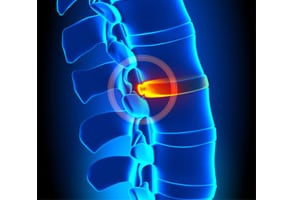
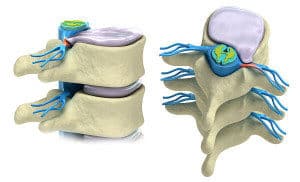
A herniated disc is a more advanced injury. The annulus fibrosus tears or cracks. The soft nucleus pulposus pushes through the tear and escapes into the spinal canal. This is a non-contained disc injury.
The escaped material can press directly on a spinal nerve root. It also releases inflammatory chemicals including cytokines and phospholipase A2. These chemicals irritate the nerve sheath and amplify the pain signal. A herniated disc produces both mechanical compression and chemical irritation. That combination explains why herniated discs tend to cause sharper, more intense symptoms than bulging discs.
Spine and Posture Care sees both types at the Macquarie Street and Barangaroo clinics. A herniated disc can result from a sudden event like heavy lifting with poor form, a fall, or a sports collision. It can also develop from a bulging disc that continues to weaken until the annulus finally tears.
How Each Type Affects the Spine Differently
The core difference between a bulging disc and a herniated disc is containment. A bulging disc is contained. A herniated disc is not.
That distinction changes the way the disc interacts with surrounding structures. A bulging disc pushes outward evenly and may not contact a nerve root at all. When it does, the compression is typically mild and gradual. Recognising bulging disc symptoms in the lower back early allows treatment to begin before the bulge progresses to a herniation.
A herniated disc is focal. The tear allows inner material to escape at a specific point. That material often presses directly on a single nerve root. The nerve responds with sharp, radiating pain, numbness, and weakness in the area it supplies.
Bulging Disc vs Herniated Disc Comparison
| Feature | Bulging Disc | Herniated Disc |
|---|---|---|
| Outer wall (annulus) | Intact, stretched | Torn or cracked |
| Inner material (nucleus) | Contained | Escaped through tear |
| Pattern of protrusion | Broad, even bulge | Focal, localised protrusion |
| Nerve compression | Mild or absent | Often direct and significant |
| Chemical irritation | Minimal | Inflammatory chemicals released |
| Pain severity | Mild to moderate | Moderate to severe |
| Onset | Gradual over months or years | Sudden or progressive |
| Visible on MRI | Common incidental finding | Usually symptomatic when found |
| Recovery timeline | 4 to 8 weeks typical | 6 to 12 weeks typical |
Which Is Worse: Bulging Disc or Herniated Disc
A herniated disc is generally more severe than a bulging disc. The combination of structural failure, direct nerve compression, and chemical inflammation produces a more intense symptom profile. A herniated disc is more likely to cause sciatica, arm pain, numbness, and muscle weakness.
That said, a bulging disc is not harmless. A large bulge in a narrow spinal canal can compress multiple nerve roots. A bulging disc at L4-L5 in a patient with pre-existing spinal stenosis may produce symptoms as severe as a small herniation in a patient with a wide canal. The severity depends on the size of the disc injury, the width of the spinal canal, and the location of the affected nerve.
Spine and Posture Care assesses both factors during the initial consultation. Disc size alone does not determine the treatment plan. The clinical picture, including pain distribution, neurological signs, and functional limitations, guides every decision.
When a Bulging Disc Becomes a Herniation
A bulging disc can progress to a herniated disc. Ongoing mechanical stress from poor posture, repetitive bending, or heavy lifting continues to weaken the annulus fibres. If the weakened wall eventually tears, the contained bulge becomes an uncontained herniation. Early treatment of a bulging disc reduces the risk of that progression.
Symptoms by Spinal Level: L4-L5, L5-S1, and Cervical
The symptoms of a bulging or herniated disc depend on which spinal level is affected and which nerve root is compressed.
L4-L5 Disc Injury
The L4-L5 level is the most mobile segment in the lumbar spine. A disc injury here compresses the L5 nerve root. Symptoms include pain radiating from the lower back through the buttock and down the outer leg to the top of the foot. Weakness in lifting the foot (foot drop) and difficulty walking on heels are common neurological signs. This level requires prompt sciatica treatment to prevent progressive nerve damage.
L5-S1 Disc Injury
The L5-S1 disc sits at the base of the lumbar spine where it meets the sacrum. A disc injury here compresses the S1 nerve root. Symptoms include pain radiating down the back of the leg to the heel and sole of the foot. Reduced ankle reflex and weakness in pushing off the toes during walking are typical findings. The L5-S1 disc bears the most compressive load in the spine and is the most common site for herniation.
Cervical Disc Injury
Disc injuries also occur in the neck, most commonly at C5-C6 and C6-C7. A cervical disc bulge or herniation compresses the nerve roots that supply the arm and hand. Symptoms include neck pain radiating into the shoulder and down the arm, numbness in the fingers, and grip weakness. Bulging disc symptoms in the neck often overlap with other cervical conditions and require a targeted assessment to confirm the source.
Disc pain affecting the back, neck, or legs? The team at Spine and Posture Care can determine the type and location of the disc injury and build a targeted recovery plan. Call (02) 8040 9922 or contact Spine and Posture Care to book an assessment at the Macquarie Street or Barangaroo clinic.
How Bulging and Herniated Discs Are Diagnosed
Diagnosis begins with a clinical examination. A chiropractor or physiotherapist tests spinal range of motion, nerve tension, reflexes, muscle strength, and sensation. Specific orthopaedic tests such as the straight leg raise and slump test help identify which nerve root is affected.
When Imaging Is Needed
MRI is the gold standard for visualising disc injuries. It shows the size and location of the bulge or herniation, the degree of nerve compression, and the condition of surrounding structures. X-rays do not show soft tissue and cannot confirm a disc injury directly. They can reveal disc height loss, bone spurs, and alignment changes that suggest disc degeneration.
Imaging is not always required. A clear clinical presentation with consistent neurological signs often provides enough information to start treatment. MRI becomes important when symptoms include progressive weakness, numbness that spreads, or bladder and bowel changes. The Cleveland Clinic notes that most herniated discs are diagnosed through clinical examination combined with imaging when symptoms are severe or persistent.
Treatment Options for Bulging and Herniated Discs
Conservative treatment resolves 80 to 90% of bulging and herniated discs without surgery. The approach depends on the type and severity of the disc injury.
Spinal Adjustments
Chiropractic spinal adjustments restore movement to restricted vertebral segments. Targeted adjustments reduce pressure on the affected disc and decompress the irritated nerve root. A randomised trial published in The Spine Journal found that spinal manipulation produced significant pain relief for acute back pain and sciatica with disc protrusion compared to placebo treatment.
Flexion-Distraction Therapy
Flexion-distraction uses a specialised table to gently stretch the lumbar spine. The technique creates negative pressure within the disc. That negative pressure draws the bulging or herniated material away from the nerve root. It is one of the most effective conservative treatments for contained disc injuries.
Rehabilitation Exercises
Core stabilisation and specific movement exercises form the foundation of disc recovery. McKenzie extension exercises, nerve glides, and deep core activation reduce disc pressure and improve spinal control. Combining clinical treatment with targeted lower back pain treatment exercises tailored to the disc level and injury type produces the strongest outcomes.
Recovery Timeline
Mild bulging discs often improve within 4 to 8 weeks with consistent treatment. Herniated discs with nerve compression typically take 6 to 12 weeks. Research shows that the body can reabsorb herniated disc material over time. Larger herniations actually have higher reabsorption rates than smaller ones.
When Surgery Is Considered
Surgery becomes an option when conservative treatment fails after 6 to 12 weeks, when progressive neurological deficits develop, or when cauda equina syndrome is suspected. Cauda equina syndrome involves sudden loss of bladder or bowel control, saddle area numbness, and bilateral leg weakness. It is a medical emergency that requires immediate surgical decompression.
How Posture and Lifestyle Contribute to Disc Injury
Disc injuries rarely happen from a single event alone. Most develop through cumulative damage from daily habits.
Prolonged sitting increases intradiscal pressure in the lumbar spine by up to 40% compared to standing. Sustained flexion pushes the nucleus pulposus toward the posterior wall of the disc. Over months and years, the posterior annulus weakens. That is why desk workers and drivers face higher rates of L4-L5 and L5-S1 disc injuries.
Heavy lifting with a rounded lower back places extreme shear force on the lumbar discs. A single lift with poor form can tear the annulus in a disc that has already been weakened by chronic postural stress.
Smoking accelerates disc degeneration. Nicotine restricts blood flow to the discs and reduces their ability to repair and rehydrate. Excess body weight adds compressive load to every lumbar segment. Targeted posture correction and ergonomic adjustments reduce the daily forces that damage spinal discs.
Conclusion
A bulging disc and a herniated disc involve different levels of structural damage. A bulging disc is contained. The outer wall stretches but holds. A herniated disc is not contained. The outer wall tears and inner material escapes onto the nerve. Herniated discs generally produce more severe symptoms, but the clinical picture depends on the size of the injury, the width of the spinal canal, and the spinal level affected. Conservative treatment resolves the majority of both types within 4 to 12 weeks when the correct approach is applied.
Spine and Posture Care helps patients in Sydney CBD identify the disc type, locate the affected level, and build a recovery plan that matches the injury. Combining spinal adjustments, decompression therapy, and targeted exercises addresses the cause rather than masking the pain.
A bulging or herniated disc does not have to control daily life. Spine and Posture Care can identify the disc injury and build a targeted treatment plan. Call (02) 8040 9922 or contact Spine and Posture Care to book at the Macquarie Street or Barangaroo clinic in Sydney CBD.
Frequently Asked Questions
Can a bulging disc become a herniated disc?
A bulging disc can progress to a herniated disc over time. The bulge represents weakening of the outer annulus fibrosus without a tear. If the mechanical stress continues through poor posture, repetitive bending, or heavy lifting, the weakened fibres eventually tear. Once the tear forms, the soft inner nucleus pulposus pushes through and escapes into the spinal canal. That transition converts a contained bulging disc into a non-contained herniated disc. Early treatment of a bulging disc through spinal adjustments, postural correction, and core strengthening reduces the load on the weakened annulus and lowers the risk of progression to herniation.
How long does a bulging disc take to heal?
A mild bulging disc often improves within 4 to 8 weeks of consistent conservative treatment. That timeline assumes the patient follows the treatment plan, modifies aggravating activities, and performs prescribed exercises. Larger bulges or those in patients with pre-existing spinal stenosis may take 8 to 12 weeks. Factors that slow recovery include continued heavy lifting, prolonged sitting without breaks, smoking, and obesity. Disc tissue has a limited blood supply, which means healing relies on movement, hydration, and reduced mechanical stress. Chiropractic adjustments combined with core stabilisation exercises create the conditions for the disc to recover.
Is a herniated disc a medical emergency?
A standard herniated disc is not a medical emergency. Most herniated discs respond to conservative treatment over 6 to 12 weeks. The exception is cauda equina syndrome. This occurs when a large disc herniation compresses the bundle of nerves at the base of the spinal canal. Symptoms include sudden loss of bladder or bowel control, numbness in the saddle area (inner thighs and groin), and progressive weakness in both legs. Cauda equina syndrome requires emergency surgery within 24 to 48 hours to prevent permanent nerve damage. Any patient with these symptoms should present to an emergency department immediately.
Can a chiropractor treat a herniated disc?
Chiropractors treat herniated discs regularly as a primary part of clinical practice. Treatment includes targeted spinal adjustments, flexion-distraction therapy, soft tissue work, and rehabilitation exercises. A randomised trial published in The Spine Journal found that spinal manipulation produced significant pain relief for acute sciatica with disc protrusion. Treatment focuses on reducing nerve compression, restoring joint movement, and building spinal stability through core strengthening. Most patients with herniated discs improve without surgery. Chiropractors also monitor for red flags that indicate a need for surgical referral, including progressive neurological deficits and signs of cauda equina syndrome.
Does a bulging disc show on an X-ray?
A bulging disc does not show on a standard X-ray. X-rays image bone, not soft tissue. A disc bulge involves the soft annulus fibrosus and nucleus pulposus, which are invisible on X-ray. X-rays can show indirect signs of disc problems, including reduced disc height between vertebrae, bone spur formation, and alignment changes. These findings suggest disc degeneration but cannot confirm a bulge or herniation. MRI is the gold standard for diagnosing disc injuries. It shows the size and exact location of the bulge or herniation, the degree of nerve compression, and the condition of the surrounding ligaments and muscles.
What is the difference between a slipped disc and a herniated disc?
A slipped disc and a herniated disc describe the same injury. The term “slipped disc” is a common but inaccurate description used in everyday language. Spinal discs do not actually slip out of place. They are firmly anchored between the vertebrae by the annulus fibrosus and the vertebral endplates. A herniated disc occurs when the outer wall of the disc tears and the inner material pushes through. The terms bulging disc, protruding disc, and ruptured disc are also used to describe different stages of disc injury. A bulging disc is contained (no tear). A herniated disc is non-contained (tear present). A ruptured disc typically describes a severe herniation where the inner material has separated completely from the disc.