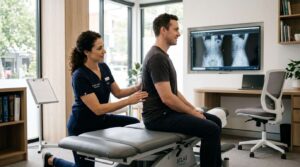



Weak glutes are one of the most overlooked causes of lower back pain. When these powerful muscles switch off, the spine quietly pays the price. The link between weak glutes and lower back pain is well recognised. Skilled lower back pain help in Sydney at Spine & Posture Care can pinpoint and fix it.
How Weak Glutes Quietly Contribute to Lower Back Pain
The glutes are the largest and most powerful muscles in the human body. They drive movement and stabilise the pelvis during almost everything we do. When they are weak, other structures quietly step in to cover the shortfall. The lower back is usually the first to take on that extra burden.
This handover happens so gradually that most people never notice it starting. The back muscles were never designed to do the powerful work of the glutes. Over weeks and months, that overwork turns into stiffness and nagging pain. Finding the real source is the first step toward genuine relief.
What the Glutes Do to Support the Spine
Strong glutes hold the pelvis level and keep the spine correctly aligned all day. They also absorb impact during walking, running, lifting and bending down repeatedly. Good glute and core strength lets these muscles share the heavy load with the spine, sparing the lower back from constant strain.
The glutes and deep core act together as a team around the pelvis and trunk. Together they form a stable base that the lower back can rely upon. Without that base, the lumbar spine becomes the body’s default shock absorber. It simply was never built to handle that repeated job alone.
Why Modern Sitting Habits Switch the Glutes Off
Long hours of sitting are the main reason modern glutes grow weak and lazy. Sitting keeps them lengthened and inactive for most of the long working day. Over time, the brain slowly struggles to fully switch them back on again. This quiet loss of strength builds up without any obvious warning at all.
This pattern is so common it has earned the nickname gluteal amnesia. Desk workers often develop prolonged sitting and back pain as a direct result. The longer the daily sitting, the harder the glutes are to reawaken. Regular movement breaks are the simplest way to keep them switched on.
How Weak Glutes Overload the Lower Back Muscles
When the glutes underperform, the lower back muscles work overtime to compensate constantly. The pelvis can also tilt forward, adding steady strain to the whole lumbar spine. This gradual overload is one of the hidden causes of back pain that so many people quietly overlook and miss.
The chiropractors at Spine & Posture Care see this exact pattern most days. Tight, overworked hamstrings often join in to help the struggling glutes. The result is a lower back that feels constantly tight, tired and sore. Treating the glutes, not just the back, is what finally breaks the cycle.
Common Signs That the Glutes May Be Weak
A few telltale signs strongly suggest the glutes are not pulling their full weight. Spotting them early makes the whole problem far easier and quicker to correct. Many people have several of these signs without ever linking them together at all. Watch for the following common warning signs:
- Lower back pain that worsens after long sitting
- Tight, overworked hamstrings and hip flexors
- A flat or forward-tilted pelvis and posture
- Poor balance when standing on a single leg
- Aching hips or knees during simple exercise
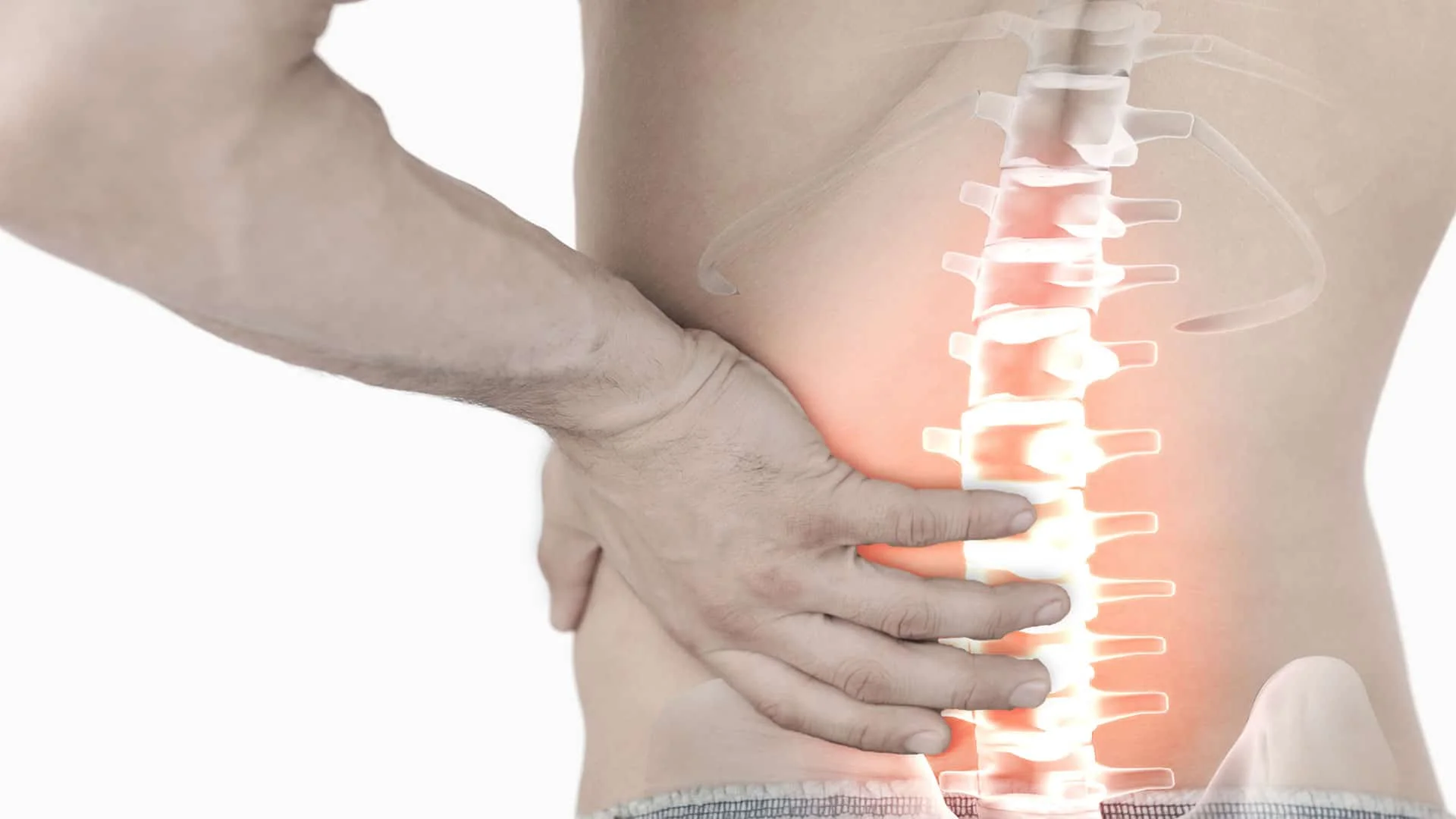
The Best Exercises to Strengthen Weak Glute Muscles
Rebuilding glute strength is refreshingly straightforward with a few targeted exercises. Consistency two or three times a week brings the fastest and safest results. Good form always matters far more than heavy weight or high repetitions. These exercises are a proven starting point:
- Glute bridges to wake up the gluteus maximus
- Clamshells to activate the smaller gluteus medius
- Hip thrusts for strong, powerful hip extension
- Single-leg bridges for balance and even control
- Squats and lunges for whole-body functional strength
Not sure whether weak glutes are behind your back pain? A proper assessment tests exactly what is strong, weak or switched off. Call (02) 8040 9922 or book a glute and back assessment for a clear, tailored plan.
A Quick Reference Table of Glute Strengthening Moves
This table matches each key glute exercise to the main muscles it targets and trains. Use it as a simple starting guide for training rather than a personal treatment plan. A hands-on assessment remains the safest way to confirm exactly what your back needs. Individual needs always vary.
| Exercise | Main Muscle Trained | Benefit for the Back |
|---|---|---|
| Glute bridge | Gluteus maximus | Restores hip extension power |
| Clamshell | Gluteus medius | Stabilises the pelvis sideways |
| Hip thrust | Gluteus maximus | Builds strong, usable strength |
| Single-leg bridge | Glutes and core | Improves balance and control |
| Squat and lunge | Glutes and legs | Supports everyday movement |
When Glute Weakness and Back Pain Need Assessment
Exercises help most people, but some back pain genuinely needs a much closer look. Persistent or spreading pain should never simply be trained through and ignored completely. Knowing the back pain symptoms to note helps people act early, before the problem quietly worsens into something bigger.
Pain that travels into a leg, with numbness or weakness, always needs attention. So does pain that keeps returning despite weeks of sensible exercise. A professional can tell whether weak glutes alone explain the ongoing pain. Getting checked early usually means a faster and smoother recovery.
How a Chiropractor Assesses and Treats This Problem
A chiropractor tests glute strength, movement and posture before starting any treatment plan. This shows clearly whether weak glutes are truly driving the lower back pain here. It also reveals any stiff joints or tight muscles adding to the problem, so nothing important is missed.
For safe exercise, healthdirect explains the basics of getting active safely in clear, plain terms. A chiropractor then adds hands-on treatment plus a tailored glute strengthening plan. The team at Spine & Posture Care rebuilds lost strength safely and helps stop the pain returning.
Building Strong Glutes for a Pain-Free Lower Back
The link between weak glutes and lower back pain is clear and very fixable indeed. Strong glutes support the pelvis, absorb impact and protect the lumbar spine every day. Building them steadily removes a hidden, stubborn source of ongoing back pain for good. The effort is well worth it.
The team at Spine & Posture Care helps Sydney patients of all ages strengthen and recover. Related issues, like back pain after long drives, often quietly ease as the glutes wake up. With strong glutes and expert support, the lower back stays healthier and stronger for far longer.
Spine & Posture Care runs two Sydney CBD clinics, on Macquarie Street and at Barangaroo, open six days a week. Book a glute and back assessment through the contact page or call (02) 8040 9922 to get started. Addressing weak glutes early protects the whole spine for many years to come.
Frequently Asked Questions
1. Can weak glutes really cause lower back pain?
Yes, weak glutes are a very common and often overlooked cause of lower back pain. Your glutes are the largest, most powerful muscles in your body, and their job is to drive movement and stabilise your pelvis. When they are weak or not firing properly, other structures have to compensate. Your lower back muscles and hamstrings take over work they were never designed to do, which leads to chronic tension, fatigue and pain in the lumbar region. Weak glutes can also allow the pelvis to tilt forward, increasing the arch in your lower back and adding further strain. On top of that, your glutes normally absorb impact when you walk, run or lift, so when they are weak, your spine becomes the default shock absorber. Over time, this overload turns into stubborn, recurring back pain. The good news is that this is very treatable. Strengthening your glutes, improving how they activate, and reducing long periods of sitting usually settles the pain at its source.
2. How do I know if my glutes are weak?
There are several signs that your glutes may be weak or underactive. The most common is lower back pain that gets worse after long periods of sitting or standing. You might also notice tight, overworked hamstrings and hip flexors, since these muscles often compensate for weak glutes. A flat or forward-tilted pelvis, poor balance when standing on one leg, and aching hips or knees during exercise are other clues. Some people find they cannot easily feel their glutes working during movements like squats or bridges, instead feeling it mostly in the back or thighs. A simple self-test is the single-leg bridge, where weakness or cramping in the hamstring rather than the glute suggests an imbalance. Keep in mind that these signs can overlap with other issues, so they are not a diagnosis on their own. If you notice several of them, especially alongside ongoing back pain, a professional assessment can confirm whether weak glutes are the underlying problem and guide your training.
3. What are the best exercises to fix weak glutes and back pain?
The best exercises focus on both activating and strengthening your glutes, and they are simple to do at home. Glute bridges are an excellent starting point because they wake up the gluteus maximus and teach it to fire properly. Clamshells and side-lying leg raises target the gluteus medius, which stabilises your pelvis from the side. As you progress, hip thrusts build powerful hip extension, while single-leg bridges challenge balance and correct side-to-side imbalances. Squats and lunges then train your glutes within whole-body movements you use every day. Aim for two or three sessions a week, focusing on feeling your glutes work rather than rushing through repetitions. Quality and control matter far more than heavy weight, especially early on. It also helps to break up long periods of sitting and add regular walking. If you have significant back pain, it is wise to have the exercises checked or prescribed by a professional, so you strengthen the right muscles without aggravating your spine.
4. Does sitting all day make my glutes weak?
Yes, prolonged sitting is one of the main reasons modern glutes become weak and underactive. When you sit for hours, your glutes are kept lengthened and switched off, while your hip flexors at the front tighten. Over time, your nervous system becomes less efficient at activating the glutes, a pattern sometimes nicknamed gluteal amnesia. The result is that even when you stand and move, your glutes may not fully engage, leaving your lower back and hamstrings to pick up the slack. This is why so many desk workers develop lower back pain that flares after a long day at the computer. The fix is a combination of moving more and training the glutes directly. Try to stand up and move every thirty to sixty minutes, take short walking breaks, and consider alternating between sitting and standing. Adding a few glute-focused exercises a couple of times each week helps reawaken the muscles. Together, these habits keep your glutes active and protect your lower back.
5. How long does it take to fix back pain from weak glutes?
The timeframe varies, but many people notice improvement within a few weeks of consistent glute training and better movement habits. Early on, simply activating the glutes and reducing long periods of sitting can ease some of the constant tension in your lower back. Building real, lasting strength takes longer, usually somewhere between six and twelve weeks of regular exercise two or three times a week. The exact timeline depends on how weak your glutes were to start, how long the problem has been present, and how consistent you are. Daily habits matter just as much as the exercises, so movement breaks and good posture speed things up. It is also worth knowing that if other issues are involved, such as a stiff joint or a disc problem, glute work alone may not fully resolve the pain. If you are not improving after several weeks of genuine effort, a professional assessment can identify what else might be contributing and refine your plan for faster results.
6. Should I see a chiropractor for glute-related back pain?
Seeing a chiropractor is a sensible step if your glute-related back pain is persistent, recurring, or not improving with exercise alone. A chiropractor can test your glute strength, movement and posture to confirm whether weak glutes are genuinely driving your pain, or whether something else is contributing. This matters because back pain has many possible causes, and the right treatment depends on an accurate diagnosis. If weak glutes are the issue, a chiropractor can combine hands-on treatment to settle the painful area with a targeted strengthening plan to fix the root cause. They can also check for stiff joints, tight muscles or movement faults that make it hard for your glutes to work well. You should book an assessment sooner rather than later if your pain spreads into a leg, comes with numbness, tingling or weakness, or follows an injury. For everyday aches linked to weak glutes and long sitting, early professional guidance often means a faster recovery and fewer flare-ups down the track.