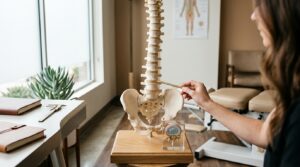


I treat a lot of older patients whose main complaint isn’t one sharp injury — it’s the slow accumulation of stiffness, imbalance, and pain that comes with decades of wear on the spine and joints. Aging changes how bones, discs, and muscles respond to treatment, and that means the chiropractic approach has to change with it.
Table of Contents
ToggleFalls, fractures, and lost independence are real risks once mobility starts slipping in older adults. Gentle, age-appropriate chiropractic care addresses the stiffness and imbalance behind those risks before they turn into a hospital visit. I see this shift in confidence in patients constantly.
Here’s what I’m covering: why older bodies need a different treatment approach, the conditions this type of care most often addresses, how the techniques themselves differ from standard adjustments, and the real benefits patients notice. I’ll also walk through what a first assessment looks like and the safety screening that comes before any hands-on work.
Why Aging Bodies Need a Different Approach to Chiropractic Care
The spine doesn’t age the same way for everyone, but certain patterns show up again and again. Discs lose hydration and shrink. Joints stiffen. Bone density drops. None of that happens overnight, and none of it responds well to the same force or technique used on a 30-year-old’s spine.
How the Spine and Joints Change With Age
Intervertebral discs are a mix of cartilage and fluid, and that fluid content decreases with age. Less fluid means less cushioning between vertebrae, which is part of why older adults report more stiffness after sitting or sleeping in one position.
Facet joints — the small joints connecting each vertebra — also develop arthritic changes over time. Osteoarthritis is a joint condition that develops when cartilage breaks down and bone-on-bone friction increases. That friction is what generates a lot of the deep, aching stiffness patients describe in their neck and lower back.
I look at these changes as the baseline, not the problem itself. The goal isn’t to reverse aging. It’s to work with what the spine is actually doing and reduce the pain that comes from it.
Common Risk Factors Unique to Older Patients
Bone density loss is the big one. It changes how much force a joint or vertebra can safely handle, and it directly shapes which adjustment techniques are appropriate.
Medication use matters too. Blood thinners, for example, raise bruising and bleeding risk with certain manual techniques, so I always review a full medication list before touching a treatment plan. Balance and proprioception decline separately from all of this, and that’s its own risk factor entirely — one that ties directly into fall risk.
Common Conditions Senior Chiropractic Care Addresses
Most of the conditions I see in older patients cluster around three areas: degenerative joint changes, nerve compression, and balance-related mobility issues. Each one needs a slightly different plan.
Osteoarthritis and Degenerative Joint Pain
Osteoarthritis shows up most in the knees, hips, and spine, and it’s the single most common reason older patients come in for assessment and posture correction in the first place. The pain tends to be worse in the morning, eases with light movement, then returns after long periods of activity or rest.
The National Institute on Aging notes that osteoarthritis affects more than 32.5 million adults in the United States, with prevalence rising sharply after age 65. That scale is exactly why gentle joint mobilization and targeted soft tissue work matter so much in this population — it’s not a rare complication, it’s close to the norm.
Spinal Stenosis and Nerve Compression
Spinal stenosis is a narrowing of the spinal canal that puts pressure on the nerves running through it. It causes leg pain, numbness, and weakness that gets worse with walking or standing and improves when leaning forward or sitting.
This one requires careful diagnosis before any hands-on treatment starts. I’m looking for whether the compression is central or affecting a specific nerve root, because that distinction changes the entire plan.
Balance, Falls, and Mobility Decline
Balance decline is quieter than pain, but it’s arguably more dangerous. The CDC reports that one in four Americans aged 65 and older falls each year, and falls are the leading cause of injury-related death in that age group.
Chiropractic care that improves joint mobility and reduces compensatory movement patterns plays a direct role in fall prevention. Better hip and ankle mobility means a person catches their balance instead of losing it entirely.
How Geriatric Chiropractic Treatment Differs From Standard Care
Standard chiropractic techniques assume a certain amount of bone density, joint flexibility, and tissue resilience. Geriatric care throws that assumption out and rebuilds the approach around what an aging body can actually tolerate safely.
Gentler, Low-Force Adjustment Techniques
High-velocity, low-amplitude thrusts — the classic “cracking” adjustment — aren’t always appropriate for older patients, especially those with reduced bone density. I lean on techniques like the Activator Method or gentle mobilization instead, which apply controlled, low-force pressure without the same joint stress.
Soft tissue work and myofascial release get used more heavily here too. They loosen tight muscles around a stiff joint without asking that joint to move suddenly or forcefully.
Adjusting Treatment Plans for Bone Density and Frailty
Osteoporosis is a condition characterized by reduced bone density that makes fractures more likely from relatively minor stress. Any patient with confirmed or suspected osteoporosis gets a treatment plan built around avoiding high-force techniques entirely.
Frailty changes the conversation further. Session length, technique intensity, and even the frequency of visits all get adjusted based on how a person’s body is responding week to week — not on a generic template.
Benefits of Chiropractic Care for Older Adults
Patients don’t usually walk in chasing a specific outcome. They want less pain and more ability to do the things they used to do without thinking twice. Both of those show up consistently with the right care plan.
Improved Mobility and Independence
Regular, gentle chiropractic care keeps joints moving through a fuller range of motion, and that translates directly into daily tasks — getting out of a chair, reaching a shelf, walking without hesitation. I watch this show up in how patients describe their week, not just in a goniometer reading.
Independence is really the underlying goal for most older patients. Staying mobile means staying out of assisted care longer, and that’s worth more to most people than any single pain score.
Reduced Reliance on Pain Medication
Long-term NSAID or opioid use in older adults carries real risk — kidney strain, GI bleeding, medication interactions all become more likely with age. Manual therapy that reduces pain at the source cuts into that reliance without adding a new medication to the list.
I’ve had plenty of patients cut their pain medication use in half once their joint mobility genuinely improved. That’s not a guarantee for every case, but it’s a common enough pattern that it shapes how I talk about rehabilitation and long-term spinal health goals with older patients from the first visit.
What to Expect During a Senior Chiropractic Assessment
A first visit for an older patient looks different from a standard intake. There’s more history to cover, more caution built into the physical exam, and more time spent explaining what comes next.
Health History and Risk Screening
I go through medication lists, prior surgeries, bone density scans if they exist, and any diagnosed conditions like osteoporosis or cardiovascular disease. This isn’t a formality — it directly determines which techniques are even on the table.
Fall history gets asked about specifically too. A patient who’s fallen twice in the past year needs a different conversation than one who hasn’t, even if their presenting complaint is identical.
Building a Personalized, Safe Treatment Plan
Once the screening is done, I put together a plan that accounts for bone density, current medications, and how much force the body can reasonably tolerate. It’s never a copy-paste of a younger patient’s plan with the intensity turned down — it’s built from scratch around that individual.
Reassessment happens often here too. Older bodies respond differently week to week, so the plan stays flexible rather than fixed for months at a time.
Safety Considerations and When to Seek Medical Clearance First
Chiropractic care is safe for the vast majority of older adults, but a small subset of conditions need medical clearance before any manual therapy starts. Skipping that step isn’t worth the risk.
Conditions That Require Extra Caution
Severe osteoporosis, spinal fractures, certain cancers, and unstable cardiovascular conditions all sit in this category. Anyone on long-term steroid use also needs a closer look, since steroids weaken bone density over time in ways that aren’t always obvious on the surface.
A quick conversation with a GP or specialist before starting care isn’t a delay tactic — it’s what makes the treatment plan safe to build in the first place.
Conclusion
Aging changes how the spine, joints, and muscles respond to treatment, and senior chiropractic care exists to work with those changes instead of against them. Gentler techniques, careful screening, and personalized planning make a real difference.
Mobility and independence matter more with age, not less, and the right care plan supports both directly. Falls, stiffness, and chronic pain don’t have to define daily life for older patients.
We build every senior treatment plan around your specific health history and comfort level. Reach out to Spine and Posture Care Chiropractor Sydney to start a plan designed for where your body actually is right now.
Frequently Asked Questions
Is chiropractic care safe for elderly patients?
Chiropractic care is safe for most elderly patients when techniques are adjusted for bone density and overall health. I always screen for osteoporosis and cardiovascular risk before recommending any hands-on treatment.
What is the best chiropractic technique for seniors?
Low-force techniques like the Activator Method and gentle mobilization work best for seniors. They reduce joint stress while still improving mobility and reducing pain effectively.
Can chiropractic care help with balance problems in older adults?
Chiropractic care improves joint mobility and reduces compensatory movement patterns that contribute to poor balance. Better hip and ankle mobility directly lowers fall risk in older patients.
How often should seniors see a chiropractor?
Visit frequency depends on the individual’s condition, bone density, and how their body responds to treatment. Most senior patients start with weekly visits before tapering to a maintenance schedule.
Does chiropractic care help with arthritis pain in older adults?
Chiropractic care reduces arthritis-related stiffness and pain through gentle joint mobilization and soft tissue work. It won’t reverse joint damage but it meaningfully improves daily comfort and function.
What conditions require medical clearance before chiropractic treatment?
Severe osteoporosis, spinal fractures, certain cancers, and unstable cardiovascular conditions require medical clearance first. Long-term steroid use also warrants a closer look before starting care.
Will chiropractic care reduce my need for pain medication?
Chiropractic care that improves joint mobility often reduces reliance on long-term pain medication over time. Results vary by individual, but the pattern shows up often enough to discuss early.