


Sydney winters bring shorter days, colder mornings, and a deep ache through the lower back that many locals know too well. Lower back pain treatment in Sydney sees a clear spike between June and August as cold weather changes how the spine, muscles, and joints work.
Spine and Posture Care in Sydney CBD helps patients learn why winter triggers these flare-ups and what structured lower back pain treatment looks like in practice.
How Cold Weather Affects the Lower Back
Cold air causes the soft tissues around the lower spine to tighten. Muscles shorten. Fascia stiffens. Ligaments lose some of their stretch. The result is a stiffer, less mobile lower back that strains more easily.
Blood flow to the spinal muscles also drops in cold weather. Less blood means less oxygen and fewer nutrients reaching the tissues that support the spine. This makes the lower back slower to warm up, slower to heal, and more likely to hurt during sudden moves.
The lower spine already carries a heavy load during daily tasks. Cold-related tissue changes add extra stress to an area that is already working hard. For people with worn discs, irritated joints, or poor posture, winter makes problems worse that were still manageable in warmer months.
Five Reasons Winter Makes Lower Back Pain Worse in Sydney
Reduced Physical Activity and Spinal Stiffness
Sydney residents move less during winter. Morning runs, beach walks, and outdoor workouts drop off as the cold sets in. The spine needs regular movement to keep joints loose, discs hydrated, and muscles strong. Weeks of less activity lead to stiffness through the lower and mid back.
Spinal joints that are not moved through their full range start to lock up. The muscles around them weaken. This creates a cycle where stiffness makes people avoid movement, which makes the stiffness worse.
Cold-Induced Muscle Tension and Guarding
Cold air triggers a guarding response in the body. Muscles around the lower back and pelvis tighten as a way to hold in heat. This constant tension puts extra pressure on the lumbar vertebrae and loads up the erector spinae, quadratus lumborum, and glute muscles.
Days and weeks of this tension lead to tight knots, local pain, and referred aches into the hips and thighs.
Shorter Days and Vitamin D Decline
Sydney gets fewer hours of direct sunlight between June and August. Less sun means the body makes less vitamin D. This vitamin plays a clear role in calcium uptake, bone strength, and muscle health. Low levels have been linked to more muscle pain and slower healing.
Research in the British Medical Journal found that low vitamin D is tied to higher rates of chronic muscle and joint pain. For patients with worn spinal joints, this seasonal drop adds another risk factor.
Changes in Barometric Pressure
Air pressure drops during cold fronts and winter storms. The exact reason is still debated, but many patients report more joint stiffness and lower back pain when the pressure shifts. One theory is that lower outside pressure lets swollen tissues expand slightly, which increases irritation around spinal joints and nerve roots.
Patients with facet joint wear, disc bulges, or sacroiliac joint problems often notice the strongest link between weather shifts and pain spikes.
Postural Collapse During Indoor Sedentary Hours
Winter drives more people indoors. Extra hours on couches, at desks, and in recliners load up the lumbar discs and lock in bad posture habits. Sitting in a slumped position puts up to 40% more pressure on lumbar discs than standing does.
Chiropractors in Sydney CBD see a clear winter trend of patients who have picked up or worsened a forward pelvic tilt, rounded upper back, or forward head posture from months of extra sitting. Structured posture correction programmes fix these changes before they become a long-term problem.

Winter Lower Back Pain vs Chronic Spinal Conditions
Not all winter back pain is a simple seasonal flare-up. Some patients have a real worsening of an existing spinal problem that cold weather has brought to the surface. Knowing the difference matters because the treatment path changes.
Seasonal lower back pain tends to show up as a broad stiffness and ache that gets better with movement and warmth. It usually affects the muscles and shallow joints of the lower spine. The pain is often on both sides and does not travel below the knee.
Chronic spinal conditions act differently. Disc herniations create sharp, focused pain that may shoot into the buttock, thigh, or calf along a nerve path. Spinal stenosis causes leg heaviness and cramping that gets worse with walking. Facet joint wear creates deep, local pain that flares with backward bending and twisting.
Winter can push a borderline disc bulge into painful territory. Cold-related muscle tightness around an already weak segment may be enough to press on a nerve. People who had mild, on-and-off symptoms during summer may find those symptoms becoming constant and more intense in winter. Spine and Posture Care offers structured bulging disc treatment that targets both the acute flare-up and the deeper structural problem.
When Winter Back Pain Needs Professional Treatment
The table below shows the differences between normal winter stiffness and pain that needs a clinical check-up.
| Factor | Seasonal Stiffness | Needs Professional Assessment |
|---|---|---|
| Duration | Settles within a few days of movement and warmth | Lasts beyond two weeks despite self-care |
| Pain pattern | General aching across the lower back | Sharp or burning pain in one spot |
| Radiation | Stays in the lower back area | Travels into the buttock, leg, or foot |
| Morning behaviour | Stiffness that eases within 20 to 30 minutes | Stiffness lasting more than one hour |
| Response to movement | Gets better with gentle activity | Gets worse or stays the same with movement |
| Nerve signs | None | Numbness, tingling, or weakness in the leg |
| Sleep impact | Mild or none | Pain wakes the person from sleep regularly |
| Onset | Gradual, linked to cold or lack of activity | Sudden, after a specific movement or event |
Any lower back pain with numbness, weakness, or changes in bladder or bowel function needs urgent medical care. These signs may point to cauda equina syndrome, a rare but serious condition.
How a Sydney Chiropractor Assesses Winter-Related Lower Back Pain
A proper check-up is the base of good lower back pain treatment. Every new patient goes through a structured review that goes well beyond finding where it hurts.
The process starts with a detailed history. The chiropractor maps the timeline of symptoms, finds what makes the pain better or worse, and reviews any past scans, treatment, or diagnoses. Lifestyle factors like work type, exercise habits, sleep position, and stress levels are all noted because they shape spinal health directly.
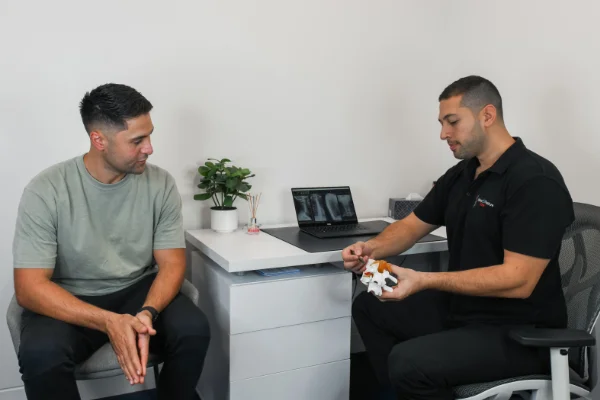
The physical exam includes tests designed to find which lumbar segments, joints, muscles, and nerves are involved. Range of motion testing across the lower back, mid back, and hips shows where movement is blocked. Hands-on testing finds areas of joint fixation, muscle spasm, and tissue tenderness. Nerve screening rules out nerve root compression.
Digital posture analysis captures front and side views to check spinal alignment, pelvic tilt, and weight balance. This gives a clear starting point for tracking progress through the treatment plan.
Winter lower back pain holding back daily life? Spine and Posture Care provides structured chiropractic care and treatment plans in Sydney CBD. Call (02) 8040 9922 or visit the contact page to book an initial assessment.
Chiropractic Lower Back Pain Treatment for Winter Flare-Ups
Spinal Adjustment and Joint Mobilisation
Chiropractic spinal adjustment targets locked-up segments in the lower spine. The aim is to bring back normal joint motion, reduce local swelling, and ease nerve irritation. For winter flare-ups, the L4-L5 and L5-S1 segments are most often involved. They carry the most load and are hit hardest by cold-related tissue tightening.
Joint mobilisation uses graded, rhythmic pressure on stiff spinal segments. This method is often paired with adjustment for patients who have strong guarding or acute muscle spasm.
Soft Tissue Therapy and Muscle Release
Targeted soft tissue work tackles the muscle tension and tissue restriction that cold weather creates. Treatment focuses on the erector spinae, quadratus lumborum, piriformis, and glute muscles. These are the main groups that tighten during winter and press on the lower spine.
Trigger point therapy releases tight knots that send referred pain into the hips, thighs, and buttocks. Myofascial release restores tissue glide between muscle layers that have stuck together from weeks of tension.
Rehabilitation and Movement Programming
Treatment without rehab leads to short-term relief that fades. Spine and Posture Care builds a structured exercise plan for every patient. Winter-specific plans focus on lumbar stability, hip mobility, upper back extension, and core endurance.
Patients get sciatica exercises and stretches and home movement plans designed to counter the effects of cold weather and indoor sitting. The plan changes as the patient moves through defined treatment milestones.
Preventing Winter Lower Back Pain Before It Starts
Prevention means acting before symptoms show up. These steps reduce the risk of winter lower back flare-ups for Sydney residents.
Keeping up regular physical activity through winter is the single best shield. Walking for 30 minutes daily keeps spinal joints loose and muscles ready. Indoor options like Pilates, yoga, or gym-based strength work keep the spine mobile when outdoor activity drops.
Warming up the lower back before morning activity helps beat overnight stiffness. Gentle lower back extensions, pelvic tilts, and cat-cow stretches done before getting out of bed prepare the spine for load.
Layering clothing keeps the lower back muscles warm during commutes and outdoor time. Cold muscles strain more easily. A warm base layer across the lower back and torso cuts down on the body’s guarding response.
Standing every 30 to 45 minutes during long indoor hours stops postural collapse. Using a lumbar support cushion and setting screens at eye height reduce the constant forward bend on lumbar discs.
Vitamin D levels may benefit from supplements during winter. A blood test through a GP shows whether this is needed. The standard daily intake for most Australian adults is 600 to 1000 IU during the colder months.
Conclusion
Winter lower back pain is not random. Cold air, less movement, postural collapse, and tissue changes combine to strain the lower spine. Understanding these causes is the first step toward managing and preventing seasonal flare-ups.
Spine and Posture Care has treated winter-related lower back conditions in Sydney CBD since 2013. Patients wanting to learn the warning signs of bad posture and how seasonal factors affect spinal health can explore structured chiropractic care built for lasting results.
Tired of winter making the same lower back pain worse every year? Spine and Posture Care has helped over 3,700 patients in Sydney CBD find lasting relief through structured chiropractic care. Call (02) 8040 9922 or contact us to book an initial consultation at Level 4, Suite 4.02, 139 Macquarie Street, Sydney NSW 2000.
Frequently Asked Questions
Why does lower back pain get worse during Sydney’s winter months?
Lower back pain gets worse in winter because cold air causes the muscles, fascia, and ligaments around the lower spine to tighten and stiffen. This limits joint movement and adds pressure on the spinal segments, mainly at L4-L5 and L5-S1. Less physical activity adds to the problem. Sydney locals tend to exercise less between June and August, which leads to weaker core and spinal support muscles. Air pressure changes during cold fronts may also flare up joint pain in people with disc or facet joint issues. Vitamin D levels drop because of fewer sunlight hours, which affects bone strength and muscle recovery. The mix of tight muscles, less movement, and poor posture from more indoor sitting creates a seasonal pattern that chiropractors in Sydney see every winter.
What is the difference between winter back stiffness and a serious spinal condition?
Seasonal winter stiffness is a broad ache across the lower back that eases within 20 to 30 minutes of gentle movement and warmth. It stays in the lower back and does not travel into the legs. A serious spinal condition acts differently. Disc herniations create sharp pain that follows a nerve path into the buttock, thigh, calf, or foot. Spinal stenosis causes heavy, cramping legs that get worse with walking and standing. Facet joint wear creates deep, local pain during backward bending and twisting. Any lower back pain with numbness, tingling, leg weakness, or bladder or bowel changes needs urgent medical care. A chiropractor uses hands-on testing and nerve screening during the first visit to tell the difference between seasonal stiffness and a deeper structural problem.
Can chiropractic treatment help with winter-related lower back pain in Sydney?
Chiropractic care suits winter lower back pain well because it targets the exact mechanical issues that cold weather creates. Spinal adjustment brings back mobility to locked lumbar joints. Soft tissue therapy releases the muscle tightness and tissue restriction that cold causes in the erector spinae, quadratus lumborum, and glute muscles. Rehab programmes rebuild the spinal support strength that drops during quieter winter months. Treatment plans are built around each patient’s assessment findings, with clear goals for pain reduction, better movement, and daily function. Digital posture analysis tracks real progress through each phase of care.
How long does it take to recover from a winter lower back pain flare-up?
Recovery time depends on how bad the flare-up is and whether an existing spinal problem is involved. Seasonal muscle tightness and joint stiffness usually respond within two to four weeks of steady chiropractic care plus home exercises. Patients with disc-related or nerve-related symptoms may need six to twelve weeks of structured care before seeing major gains. Early treatment shortens recovery. People who get lower back pain treatment within the first week of symptoms tend to bounce back faster than those who wait months. The first consultation includes a clear timeline and plan so the expected recovery path is clear from day one.
What exercises can prevent lower back pain during winter in Sydney?
Good winter prevention exercises target four areas: lumbar stability, hip mobility, upper back extension, and core endurance. Walking for 30 minutes a day keeps spinal joints loose and muscles conditioned. Pelvic tilts, cat-cow stretches, and gentle lower back extensions done each morning fight overnight stiffness. Hip flexor stretches stop the forward pelvic tilt that gets worse with long sitting during cold months. Upper back exercises on a foam roller counter the rounded posture that builds from indoor hours. Core work like dead bugs, bird-dogs, and modified planks support the lower vertebrae against daily forces. The right exercises depend on a proper assessment. A chiropractor can build a plan matched to the individual’s spinal findings and movement goals.
Should I use heat or ice for winter lower back pain?
Heat works better for winter-related stiffness and muscle tension. Placing a heat pack or hot water bottle on the lower back for 15 to 20 minutes boosts blood flow, relaxes tight muscles, and cuts the stiffness that cold air causes. Heat is most useful in the morning when tissues are at their stiffest. Ice is better for sudden injury or sharp pain, such as a fresh muscle strain or disc flare-up. Wrapping an ice pack in a towel and holding it on for 10 to 15 minutes can reduce local swelling and nerve irritation. A simple rule: use heat for chronic stiffness and cold-related tightness, and ice for sharp, sudden pain. Anyone unsure which suits their case should ask their chiropractor for advice based on their specific diagnosis.