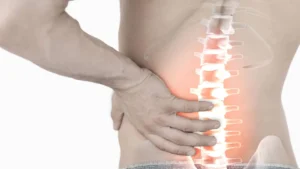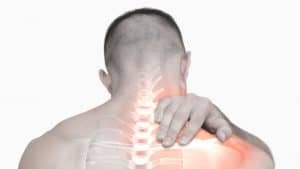


That dull ache between the shoulder blades at 3pm on a Tuesday is not random. For the thousands of people working at desks in Macquarie Street towers, Barangaroo offices, and CBD co-working spaces, mid back pain treatment in Sydney is one of the most requested services at Spine and Posture Care.
There are six specific causes behind it. Most desk workers are dealing with all six at once. This article breaks each one down.
What Is Actually Happening Between the Shoulder Blades
The area between the shoulder blades corresponds to the mid-thoracic spine, roughly T4 to T8. This region sits between two highly mobile zones: the cervical spine above and the lumbar spine below. The thoracic spine is built for stability. It tolerates sustained load poorly.
Three main structures generate pain here. The thoracic facet joints become compressed under sustained forward bending. The rhomboids and mid-trapezius muscles are placed under prolonged load when the shoulders round forward. The interscapular ligaments are overstretched when the thoracic spine stays flexed for hours. Poor posture treatment addresses all three structures because the underlying postural mechanics drive each one.
Understanding which structure is generating the pain matters. A thoracic facet irritation feels different from a rhomboid strain. The treatment approach differs accordingly. Most generic advice treats all mid back pain as a muscle problem, which misses the joint and ligament contributions entirely.
Causes 1 to 3: Structural Load Problems
These three causes relate to how the spine and surrounding muscles are mechanically loaded during desk work. A chiropractor in Sydney CBD can assess which of these is contributing most to a specific presentation. In practice, all three commonly occur together. At Spine and Posture Care, this combination is the most consistent finding in patients presenting with interscapular pain from desk work.
Cause 1: Sustained Thoracic Flexion
The single biggest driver of mid back pain in desk workers is sitting in thoracic flexion for hours without a break. When the thoracic spine rounds forward, the posterior facet joints are compressed. The anterior discs are loaded asymmetrically. The posterior ligaments are placed under continuous stretch.
The problem is not any single moment of poor posture. It is the total duration. Thoracic flexion that lasts more than 30 minutes without interruption consistently produces facet joint irritation in office patients. Sydney open-plan offices discourage the movement breaks that would prevent this loading from becoming painful. The body was built to shift between postures throughout the day. Desk culture removes that option.
Cause 2: Thoracic Facet Joint Dysfunction
Thoracic facet joints are small, cartilage-lined joints located on both sides of each vertebral level. Under sustained flexion, the joint surfaces are pressed together. The joint capsules become chronically inflamed. When this is not addressed, the joints lose their normal glide and become restricted.
Restricted thoracic facets produce a deep, localised ache between the shoulder blades. It worsens when sitting still and eases briefly with movement. That response to movement is the key clinical feature. It separates facet joint dysfunction from pure muscle pain, which typically worsens with movement rather than improving. Facet joint dysfunction requires direct joint mobilisation. Stretching and massage alone do not restore the movement restriction.
Cause 3: Rhomboid and Mid-Trapezius Overload
The rhomboids and mid-trapezius are responsible for retracting the shoulder blades. In a rounded-shoulder desk posture, they work against the constant forward pull of the arms and the pectoral muscles. Electromyography research shows these muscles fire at roughly three times their normal rate when the head sits 5 centimetres in front of the torso.
Over a full working day, this sustained overactivation produces fatigue and myofascial trigger points within the muscle belly. These trigger points create the dull, burning referral pattern that desk workers describe as tension between the shoulder blades. The muscles need to shorten and recover. That recovery can only happen when the underlying postural load is removed.
Causes 4 to 6: Workplace and Lifestyle Triggers
These three causes sit at the intersection of workspace setup and daily habits. They amplify the structural problems above. They are also the reason the same desk posture affects some workers more severely than others.
Cause 4: Monitor Height and Screen Distance
A monitor positioned too low forces the head to tilt down. This adds cervical flexion load directly to the upper thoracic spine. A 5-kilogram head becomes a 15-kilogram load when tilted 30 degrees forward. That load concentrates at T4 to T6.
Screen distance is equally problematic. A monitor placed too far from the seated worker causes a compensatory forward lean of the trunk. This compounds the thoracic flexion load from Cause 1. The correct setup positions the top of the screen at eye level, at arm’s length from the seated position. Most Sydney CBD workstations, particularly hot-desks and meeting-room setups, do not meet this standard.
Cause 5: Scapular Dyskinesis from Asymmetric Desk Habits
Scapular dyskinesis refers to abnormal movement and positioning of the shoulder blade. In desk workers, it develops from asymmetric habits. Using a mouse on one side, holding a phone between the ear and shoulder, or rotating to a second screen all create loading imbalances over time.
These patterns alter the resting position of the scapula. The serratus anterior on the loaded side becomes inhibited. The upper trapezius on the same side becomes overactive. The rhomboids on the opposite side are placed under constant stretch. The result is pain that is worse on one side of the interscapular region. Most Sydney desk workers with this cause describe their pain as predominantly right-sided, corresponding to the dominant mouse hand.
Cause 6: Stress-Driven Muscle Guarding
The mid-back is a primary site where the body holds physical tension in response to psychological stress. When the sympathetic nervous system is activated by workplace pressure, the paraspinal and interscapular muscles contract reflexively. In a demanding CBD work environment, this activation becomes near-continuous.
The problem is that this response is subconscious. Most workers do not notice the guarding until it crosses the pain threshold. By that point, the muscles have been contracted for hours. This cause is particularly relevant in Sydney CBD environments where deadline pressure, open-plan noise, and extended screen time maintain sympathetic nervous system activation throughout the day.
Mid back pain that appears every afternoon is telling you something structural needs attention. Call (02) 8040 9922 or get in touch here
to book an assessment at our Sydney CBD clinic.
Why These 6 Causes Stack Against Each Other
None of these six causes operates alone. Sustained thoracic flexion leads to facet joint dysfunction. Facet dysfunction reduces the spine’s ability to self-correct, which increases rhomboid and trapezius overload. A poorly positioned monitor drives the head forward and amplifies both the flexion load and muscle overload. Asymmetric habits create imbalances that make the spine more vulnerable to all of the above. Stress keeps the muscles contracted so they cannot recover during quieter periods.
The clinical result is a spine that is simultaneously stiff, inflamed, overloaded, and unable to recover between working days. At Spine and Posture Care, this pattern is one of the most consistent findings in CBD patients: pain worsens across the working week, eases slightly on weekends, and returns by Tuesday or Wednesday. The weekend provides partial recovery. The working week rebuilds all six causes before that recovery is complete.
Breaking this cycle requires addressing the structural drivers. Heat packs and over-the-counter pain relief manage the pain threshold. They do not restore facet joint movement, reduce rhomboid trigger points, or correct scapular positioning.
What Sydney CBD Desk Workers Can Do Right Now
Practical changes reduce the daily load while the underlying problem is being treated. These steps do not replace clinical assessment, but they reduce the accumulation of all six causes.
Set a movement timer for every 30 minutes. Standing up, walking to a colleague, or taking a call while walking all break the sustained thoracic flexion cycle. Two minutes of movement every 30 minutes is more protective than a 20-minute walk at lunch.
Raise the monitor. A monitor riser or a stack of books under a laptop stand removes the head-down flexion load from the upper thoracic spine. The top of the screen should align with eye level when seated upright. This single change directly addresses Cause 1, Cause 2, and Cause 4 simultaneously.
Use a lumbar support. Supporting the lower back maintains the lumbar curve. This reduces the compensatory thoracic rounding that loads the interscapular region. The thoracic and lumbar curves are mechanically linked. Supporting one assists the other.
All 6 Causes at a Glance
| Cause | Structure Affected | Key Driver | Typical Pattern |
|---|---|---|---|
| Sustained thoracic flexion | Facet joints, posterior ligaments | Sitting without breaks | Central ache, worsens through the day |
| Thoracic facet joint dysfunction | Facet joints T4 to T8 | Cumulative flexion load | Deep ache, eases briefly with movement |
| Rhomboid and trapezius overload | Interscapular muscles | Forward head, rounded shoulders | Burning tension between shoulder blades |
| Monitor height and distance | Cervical and upper thoracic spine | Screen too low or too far | Pain worse at screen, eases off screen |
| Scapular dyskinesis | Serratus anterior, rhomboids, upper trapezius | Asymmetric mouse and phone use | One-sided pain, worse on dominant side |
| Stress-driven muscle guarding | Paraspinal and interscapular muscles | Sustained sympathetic activation | Peaks in afternoon, eases on weekends |
When to See a Chiropractor for Mid Back Pain in Sydney
Mid back pain that has been present for more than two weeks, is interfering with work concentration, is not responding to postural changes, or is accompanied by arm or ribcage pain warrants a clinical assessment. SafeWork NSW recognises computer workstation-related musculoskeletal conditions as a significant category of workplace injury. Persistent interscapular pain falls within this category.
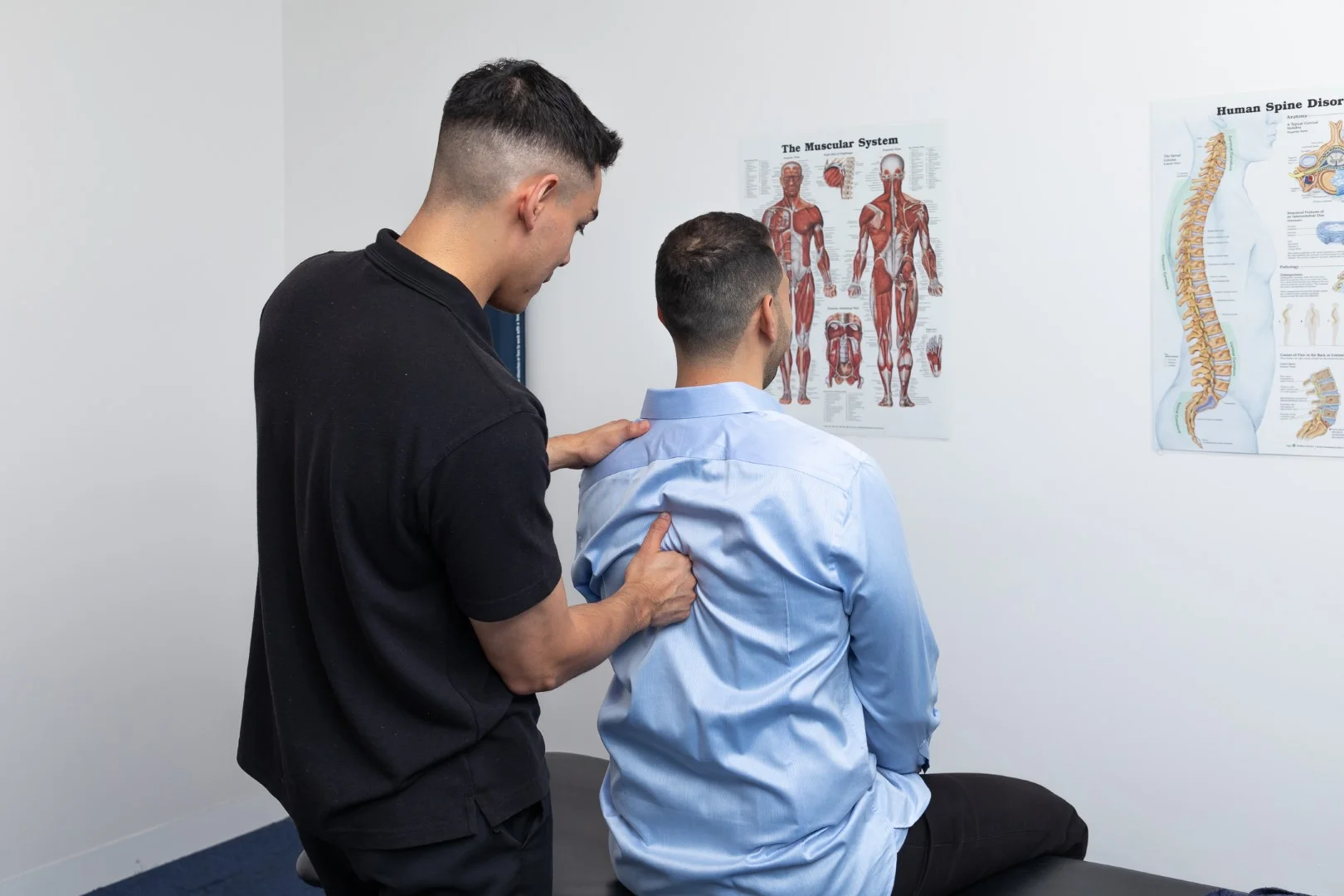
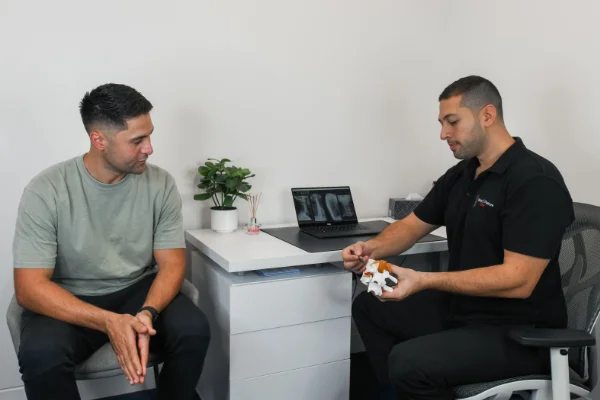
A chiropractor assesses the thoracic facet joints through motion palpation, identifies overloaded muscle groups through orthopaedic testing, and evaluates scapular positioning and movement. From that assessment, a treatment plan addresses the structural causes through joint mobilisation, soft tissue work, and postural rehabilitation. Scapular stabiliser rehabilitation is a critical component. Without it, the muscle imbalances that allow all six causes to develop remain in place after the acute pain settles.
Waiting for the pain to resolve over a long weekend is a common response. For mild, acute presentations it sometimes works. For the layered pattern described in this article, where multiple causes have been accumulating for months, it consistently does not.
Conclusion
Mid back pain between the shoulder blades in Sydney desk workers is the predictable result of six causes operating simultaneously: sustained thoracic flexion, facet joint dysfunction, rhomboid and trapezius overload, poor monitor setup, scapular dyskinesis, and stress-driven muscle guarding. Addressing one while leaving the others in place produces partial, temporary relief.
For desk workers whose working from home back pain or in-office pain has become a daily pattern, a structural assessment identifies which causes are most active and builds a targeted treatment plan. Spine and Posture Care provides a full thoracic and postural assessment at the first appointment, including a specific review of the workplace factors contributing to the presentation.
If mid back pain between the shoulder blades is affecting work performance or daily life, call Spine and Posture Care on (02) 8040 9922 or contact the clinic directly to arrange an assessment. Appointments are available throughout the week at both the Macquarie Street and Barangaroo CBD locations.
Frequently Asked Questions
What causes mid back pain between the shoulder blades in desk workers?
Mid back pain between the shoulder blades in desk workers typically results from a combination of six factors. Sustained thoracic flexion compresses the facet joints of the mid-spine. The rhomboid and mid-trapezius muscles become overloaded from holding the shoulder blades against the pull of rounded shoulders. A monitor positioned too low adds cervical and thoracic flexion load. Asymmetric habits such as one-sided mouse use create scapular imbalances that produce one-sided interscapular pain. Workplace stress drives subconscious muscle guarding that keeps the interscapular muscles contracted throughout the day. Most desk workers present with all of these factors active simultaneously, which is why the pain becomes persistent rather than resolving on its own.
Is mid back pain between the shoulder blades serious?
In most desk workers, mid back pain between the shoulder blades is a mechanical musculoskeletal problem rather than a sign of a serious condition. The pain comes from the joints, muscles, and ligaments of the thoracic spine responding to sustained load. However, mid back pain accompanied by shortness of breath, chest pain, or pain radiating into the jaw warrants urgent medical assessment to rule out cardiac causes. Mid back pain that is progressively worsening without a clear desk-work trigger also warrants investigation. For the typical desk worker presentation, a chiropractic assessment is the appropriate first step.
How long does mid back pain between the shoulder blades take to resolve with chiropractic treatment?
Most desk workers notice significant improvement within three to six chiropractic sessions when structural causes are addressed alongside workstation corrections. Cases where facet joint dysfunction has been present for months, or where significant muscle trigger points have developed, require a longer rehabilitation phase to restore full scapular stability and prevent recurrence. Recovery speed is strongly influenced by whether workplace ergonomics are also corrected during the treatment period. Pain that returns to the same level between sessions usually means the daily loading pattern has not changed.
Can a chiropractor in Sydney CBD help with mid back pain between the shoulder blades?
Yes. Chiropractic assessment is well suited to desk-related mid back pain. A chiropractor assesses the mobility of each thoracic vertebral level, identifies restricted facet joints through motion palpation, and evaluates scapular positioning and muscle recruitment patterns. Treatment includes joint mobilisation, soft tissue therapy, and postural rehabilitation. The rehabilitation component, which focuses on reactivating the mid and lower trapezius and serratus anterior, is what prevents the pain from returning once the acute symptoms settle. Without this phase, the muscle imbalances that caused the problem remain in place.
What is the fastest way to relieve mid back pain between the shoulder blades at a desk?
The fastest immediate relief comes from standing and gently extending the thoracic spine in the opposite direction to the seated flexion position. Standing, placing the hands on the lower back, and gently extending backwards for 10 seconds decompresses the posterior facet joints and gives overstretched posterior ligaments brief relief. Setting a timer to repeat this every 30 minutes throughout the working day significantly reduces the total compression load. This is not a treatment for the underlying causes, but it interrupts the cycle of sustained compression. For resolution of the structural causes, a clinical assessment and targeted treatment plan is necessary.