

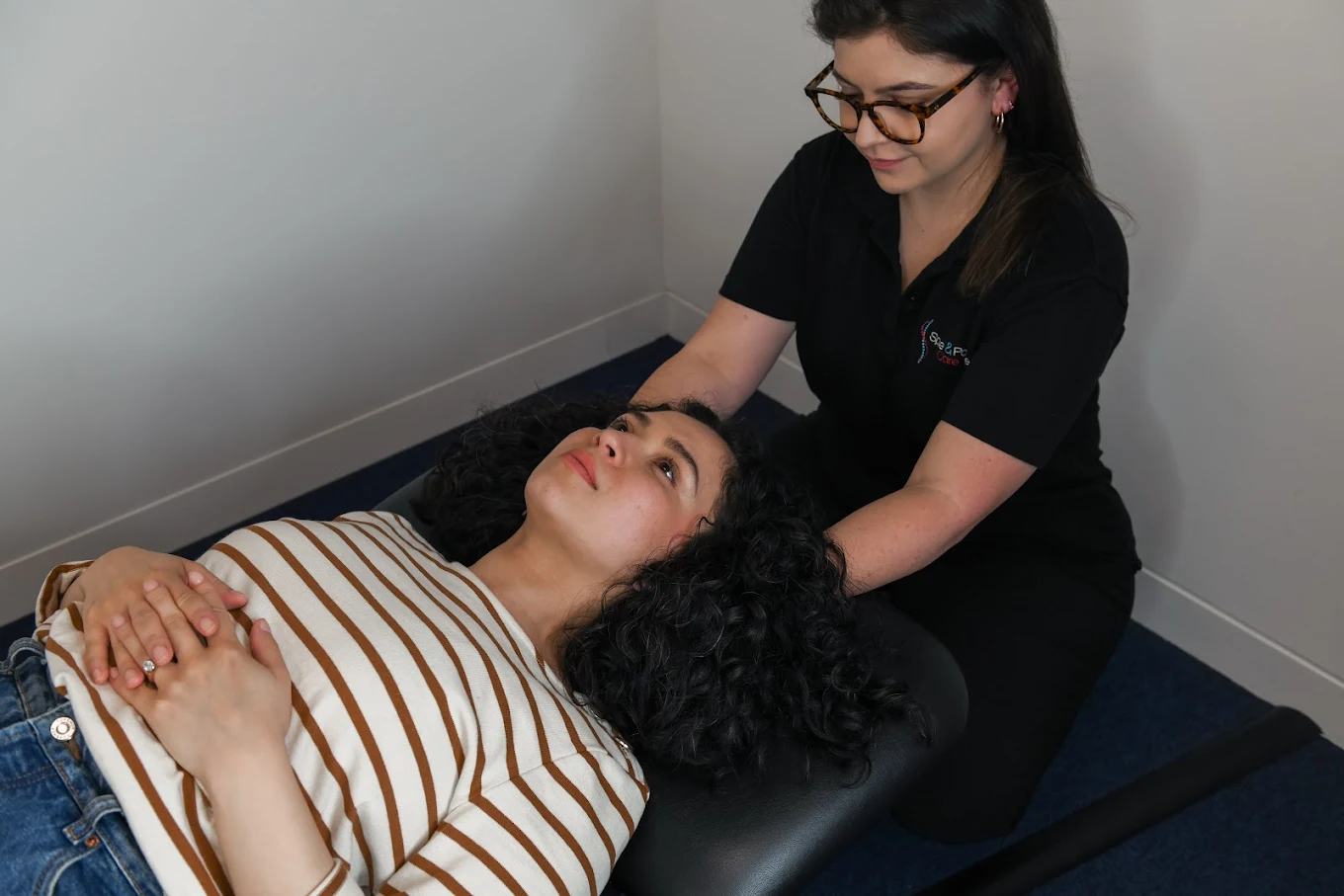
First chiropractic appointments in Sydney generate a consistent set of questions before patients even walk through the door. Will it hurt? Will the neck be cracked? How long will it take? What information is needed?
At Spine and Posture Care, these are the questions the clinical team hears most often from people booking their first visit with a chiropractor in Sydney CBD. The short answer is that a first appointment is not a treatment session. It is a structured assessment. Understanding what actually happens, and in what order, removes most of the uncertainty before arriving.
How the First Appointment Differs from a Regular Visit
A first chiropractic appointment is longer, more detailed, and structured differently from every subsequent visit. Regular appointments at an established chiropractic practice typically run 15 to 30 minutes and focus on treatment. A first appointment runs 45 to 60 minutes and focuses primarily on assessment, history, and diagnosis.
The reason is straightforward. A chiropractor cannot treat a condition that has not been properly assessed. Before any hands-on treatment begins, the clinical picture needs to be complete. That means understanding the patient’s history, the nature of the complaint, any previous injuries or conditions, and the results of a physical examination. The full range of conditions we treat at both Sydney CBD locations spans back pain, neck pain, headaches, sciatica, posture problems, and bulging discs. Each requires a different assessment pathway.
Patients who attend a first appointment expecting to receive the same experience as a regular adjustment are sometimes surprised by the amount of time spent on questions and assessment before any treatment begins. This is by design, not by accident.
What Happens Step by Step
The first appointment at a Sydney chiropractic clinic follows a consistent structure. The sequence below is how it unfolds at Spine and Posture Care, at both the Macquarie Street and Barangaroo chiropractic clinic locations.
Step 1: Intake Form Completion (Before or on Arrival)
New patients complete an intake form before or at the start of the appointment. This covers the chief complaint, symptom duration, location and behaviour of the pain, relevant medical history, medications, previous imaging or scans, and current lifestyle factors including work posture and activity level. The more detail provided on this form, the more efficiently the consultation can proceed.
Patients who have recent scan results, such as an MRI or X-ray report, should bring a copy. This prevents duplication of imaging and gives the chiropractor a documented baseline to work from.
Step 2: The Consultation (10 to 15 Minutes)
The chiropractor reviews the intake form and conducts a structured verbal consultation. The focus is on understanding the full picture of the complaint. This covers when it started, what makes it better or worse, whether pain radiates, how it affects daily activities, and what has already been tried. Previous treatment outcomes are also relevant.
This is not a rushed intake. The information gathered here directly shapes which orthopaedic and neurological tests are performed in the assessment phase. A thorough consultation leads to a more targeted examination.
Step 3: The Physical Assessment (15 to 20 Minutes)
The physical assessment is the clinical core of the first appointment. It typically includes the following components.
Postural assessment. The patient is observed standing from the front, back, and side. The chiropractor notes any lateral deviation of the spine, head position, shoulder level, pelvic symmetry, and overall spinal curvature. This provides a visual baseline that is used to track progress throughout care.
Range of motion testing. Active and passive movement is assessed across the relevant spinal regions. The chiropractor notes which movements are restricted, which reproduce symptoms, and where the limitation originates.
Orthopaedic testing. A series of specific clinical tests is used to identify the likely structure involved. These tests help differentiate between disc involvement, joint restriction, nerve irritation, and muscular causes of the presenting complaint.
Neurological screening. For presentations involving radiating pain, numbness, or tingling, reflex testing and sensory screening help identify whether nerve function is affected and at which level.
Motion palpation. The chiropractor manually assesses each vertebral segment for mobility, tenderness, and joint restriction. This is the most direct assessment of spinal joint function and is the foundation for determining which segments require treatment.
Step 4: Findings and Care Plan Discussion (10 Minutes)
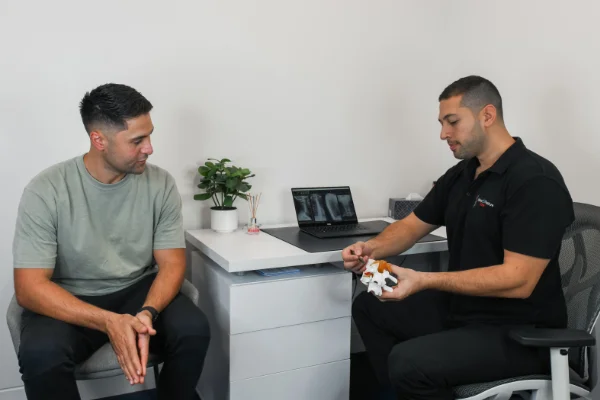
After the assessment, the chiropractor explains the findings in plain language. This includes identifying the structures involved, the likely cause of the symptoms, and what the treatment pathway looks like. A care plan is proposed. It typically covers an initial phase of sessions, a reassessment milestone, and a transition to either maintenance or discharge.
This is also the point at which the patient can ask questions about the diagnosis, the proposed treatment approach, or anything covered during the assessment. No treatment begins until the patient understands and agrees to proceed.
Step 5: First Treatment (10 to 15 Minutes, Where Appropriate)
In most cases, gentle treatment begins on the same day as the first assessment. This is not the same depth of treatment as a regular session, and the priority is to introduce the patient to the techniques involved rather than to deliver the full treatment protocol. For presentations involving significant acute pain or where further imaging is required before treatment, the first session may be assessment only.
What Each Chiropractic Technique Feels Like
One of the most common concerns before a first appointment is uncertainty about what the treatment will feel like physically. Different techniques produce different sensations. Understanding what to expect removes most of the anxiety.
Diversified adjustment. This is the most recognisable chiropractic technique. The chiropractor applies a controlled, specific thrust to a restricted spinal joint. The thrust is fast and precise. An audible pop or click is common. This sound is caused by gas released within the joint capsule. It is not the sound of bones cracking. The thrust itself is momentary. Patients typically describe it as pressure followed by an immediate sense of release or lightened tension in the area.
Drop piece technique. A specialised table with drop-release sections assists the adjustment. The section drops slightly as the thrust is applied, reducing the force required. This produces a firm but gentler sensation than the diversified technique. It is commonly used for lumbar and pelvic adjustments.
Activator method. A small spring-loaded instrument applies a precise, low-force impulse to a specific joint. There is no rotation or thrust involved. The sensation is a light tap. This technique is suitable for patients who are anxious about manual adjustment, are managing osteoporosis, or have had recent surgery.
Joint mobilisation. The joint is moved gently and repeatedly through its available range without a thrust. This technique feels like a rhythmic passive stretch. It is commonly used for stiff thoracic segments or for gentle introduction to care.
Common Concerns Before a First Appointment
Will the neck be manipulated? Cervical adjustment is only performed when the assessment indicates it is clinically appropriate. Patients who prefer not to have cervical adjustment can request alternative techniques at any point. Neck mobilisation, soft tissue work, and upper thoracic adjustment can address many neck complaints without cervical manipulation.
Is chiropractic safe? Chiropractors in Australia are registered health professionals regulated by AHPRA. At Spine and Posture Care, every practitioner holds current registration and all treatment decisions follow evidence-based clinical guidelines. Safety screening is part of the assessment process before any treatment begins.
What if treatment makes things worse? Post-treatment soreness in the 12 to 24 hours following an adjustment is common, particularly after the first few sessions. This is a normal inflammatory response and typically resolves within a day. It is different from the original complaint and should not be confused with the condition worsening.
Booking a first appointment at a Sydney CBD clinic should be straightforward. Call (02) 8040 9922 or get in touch here and a member of the team will confirm availability and answer any questions before the visit.
What Happens After the First Visit
The period immediately following the first appointment is when most new patients decide whether to proceed with care. The chiropractor will have outlined a recommended treatment plan during the findings discussion. That plan typically consists of an initial phase of more frequent visits, followed by a reassessment and a transition to a maintenance schedule.
Patients are not obligated to commit to the full plan at the first appointment. The recommendation is presented and discussed, but the decision to proceed at any pace is made by the patient. A reputable clinic will not pressure patients into a long-term commitment before they have had a chance to assess whether the first session was useful.
Home care recommendations are part of the first appointment at most Sydney CBD chiropractic clinics. These may include advice on sleep position, brief daily exercises, posture modifications, or ice and heat application. These recommendations bridge the gap between clinic sessions and significantly influence how quickly the condition responds.
How to Prepare for Best Results
Wear comfortable clothing. Clothing that allows the chiropractor to assess the spine and perform orthopaedic tests without restriction is ideal. Activewear or loose-fitting clothing is appropriate. For CBD workers attending during a lunch break, a change of shirt is helpful but not essential.
Bring relevant documentation. Any existing MRI reports, X-rays, or specialist letters should be brought to the first appointment. If these are saved electronically, having them accessible on a phone or sent ahead is equally useful.
Arrive five minutes early. The intake form needs to be completed before the consultation begins. Arriving on time but needing to fill in the form first cuts into the consultation time, not the assessment time.
Plan for 60 minutes. The first appointment at most Sydney CBD clinics runs close to an hour. Scheduling it with a clear hour on either side avoids the situation of being rushed through the findings discussion.
Note symptom patterns. Being able to describe when the pain is worst, what activities aggravate it, and whether it changes through the day gives the chiropractor more precise information in less time. A brief mental note or written list before arriving is worth preparing.
First Appointment at a Glance
| Stage | Duration | What Happens |
|---|---|---|
| Intake form | 5 to 10 min | Health history, symptom detail, consent |
| Consultation | 10 to 15 min | Verbal assessment of complaint, history |
| Physical assessment | 15 to 20 min | Posture, range of motion, orthopaedic and neuro tests, palpation |
| Findings discussion | 10 min | Diagnosis explained, care plan proposed |
| First treatment | 10 to 15 min | Initial gentle treatment if appropriate |
| Total | 45 to 60 min |
When to Book a First Chiropractic Appointment in Sydney
A first appointment is appropriate when a musculoskeletal complaint has been present for more than a few days, is limiting daily activity, or is not resolving on its own. Back pain, neck pain, headaches with a spinal or postural origin, sciatica, and poor posture are among the most common reasons patients book. None of these require a GP referral for a private chiropractic visit.
All chiropractors in Australia are regulated by AHPRA, the Australian Health Practitioner Regulation Agency. Practitioner registration can be verified directly on the AHPRA website before booking. This is worth doing for anyone who has not previously seen a chiropractor and wants to confirm the practitioner’s standing.
Sydney CBD chiropractic clinics that offer early morning, lunchtime, and late afternoon appointments are accessible for full-time workers without requiring time off. This is worth confirming at the time of booking, particularly for new patients who need a longer initial appointment slot.
Conclusion
A first chiropractic appointment is a structured clinical assessment that ends with a diagnosis, a treatment recommendation, and typically a first session of gentle care. The process is methodical, not unpredictable. Knowing what to bring, how long to allow, and what questions to ask beforehand makes the experience productive from the first visit.
For patients comparing options before booking, the guide to choosing a chiropractor vs physiotherapist in Sydney covers the differences in approach and how to identify which pathway suits a specific complaint. Spine and Posture Care offers first appointments at both the Macquarie Street and Barangaroo CBD locations throughout the week, including early morning and Saturday slots.
To book a first appointment or ask any questions before attending, call Spine and Posture Care on (02) 8040 9922 or Contact the clinic directly. No referral is required.
Frequently Asked Questions
How long does the first chiropractic appointment take in Sydney?
A first chiropractic appointment at a Sydney CBD clinic typically runs 45 to 60 minutes. This is significantly longer than a regular appointment because the first visit is primarily an assessment rather than a treatment session. The time spans five stages: an intake form, a verbal consultation, a physical assessment, a findings discussion, and where appropriate, a first gentle treatment. Each stage has a clear clinical purpose. Patients should plan for a full hour and avoid scheduling back-to-back commitments immediately after.
Do chiropractors always crack the back at the first appointment?
No. The adjustment technique used depends on the assessment findings and the patient’s preference. Not all chiropractic treatment involves audible joint sounds. Techniques such as activator instrument adjusting, joint mobilisation, and drop piece technique are effective alternatives that do not produce the characteristic pop. Patients who are uncomfortable with manual adjustment or have concerns about any technique should communicate this before treatment begins. A registered chiropractor will always have alternative approaches available.
Do I need a referral to see a chiropractor in Sydney?
No referral is required to book a first chiropractic appointment in Sydney. Any patient can book directly as a private patient and pay the consultation fee at the time of the visit. A GP referral is only needed if the patient intends to claim a Medicare rebate through the GPCCMP pathway for a qualifying chronic condition. For most new patients attending for the first time, a referral is not necessary and the appointment can be booked online or by phone.
What should I wear to my first chiropractic appointment?
Comfortable clothing that allows free movement is the most practical choice. Activewear or clothing that can be easily adjusted is ideal because the chiropractor needs to assess posture, perform range of motion testing, and conduct palpation of the spine. For CBD office workers attending during a lunch break, changing out of work clothes entirely is not essential. Loose-fitting options are more practical than a fitted suit, but either works.
Will I receive treatment at my first chiropractic appointment?
In most cases, gentle treatment is provided at the first appointment after the assessment and findings discussion are complete. The depth of treatment is lighter than a regular session. The focus is on introducing the patient to the techniques involved and addressing the most restricted or symptomatic areas. In cases where the presentation requires imaging before treatment, or where the patient prefers to consider the care plan before proceeding, the first session may be assessment only. No treatment is ever provided without the patient’s understanding and agreement.